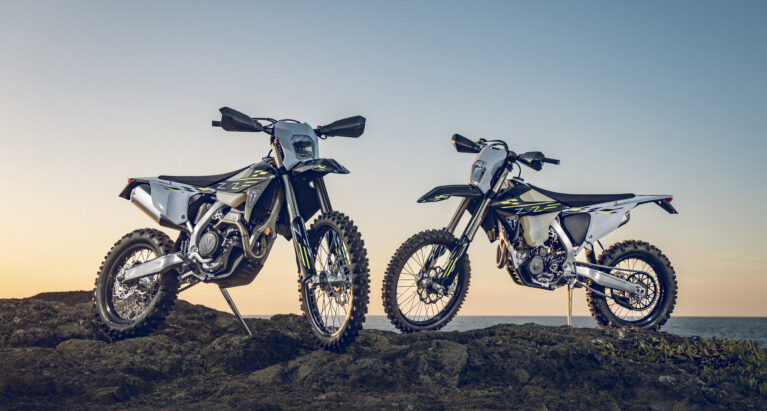
EXPLAINER: TRIUMPH’S ENDURO VS MX MODELS
Ever since we threw a leg a leg over Triumph’s first ever enduro models at the bikes’ Aussie media launch back in June, barely a day goes by when we don’t field enquiries about the British manufacturer’s all-new 2026 TF250-E and TF450-E. Naturally, our first response is to direct people to the comprehensive piece we published in the wake of that launch, where we answered a slew of your FAQs about these new Triumphs; or to the 10-minute video that took our audience behind the scenes at the launch and captured our first impressions.
Somehow, though, this wasn’t enough for many of you, evidenced by the fact that we’re still being inundated with Triumph-related questions. So, we’ve decided to answer the most frequent FAQs, one at a time.
This time, let’s address all your questions about the how, specifically, the all-new enduro models differ from their MX-model counterparts…

HOW DIFFERENT ARE TRIUMPH’S ENDURO MODELS FROM THE MX BIKES, WHICH WERE RELEASED LATE LAST YEAR?
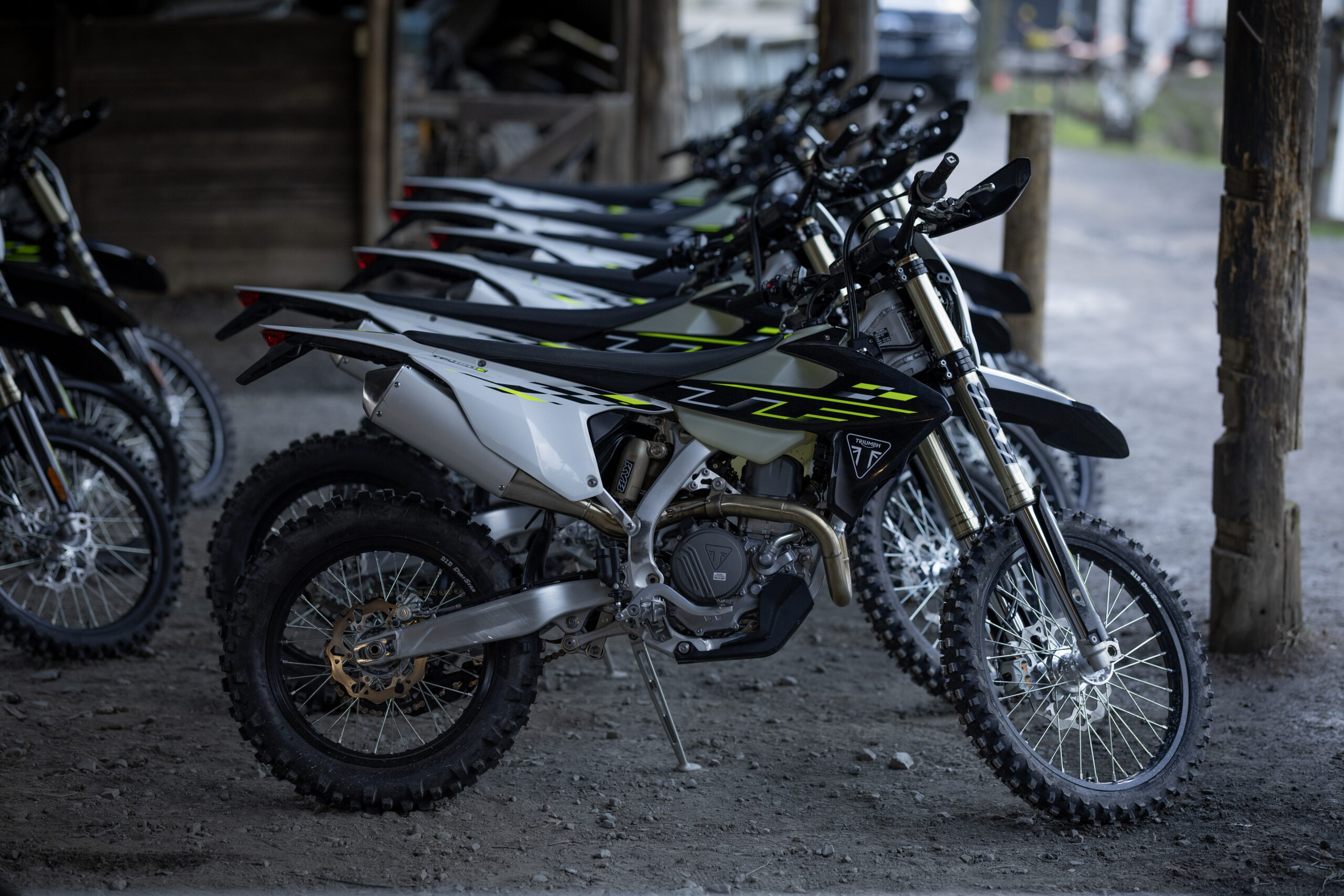
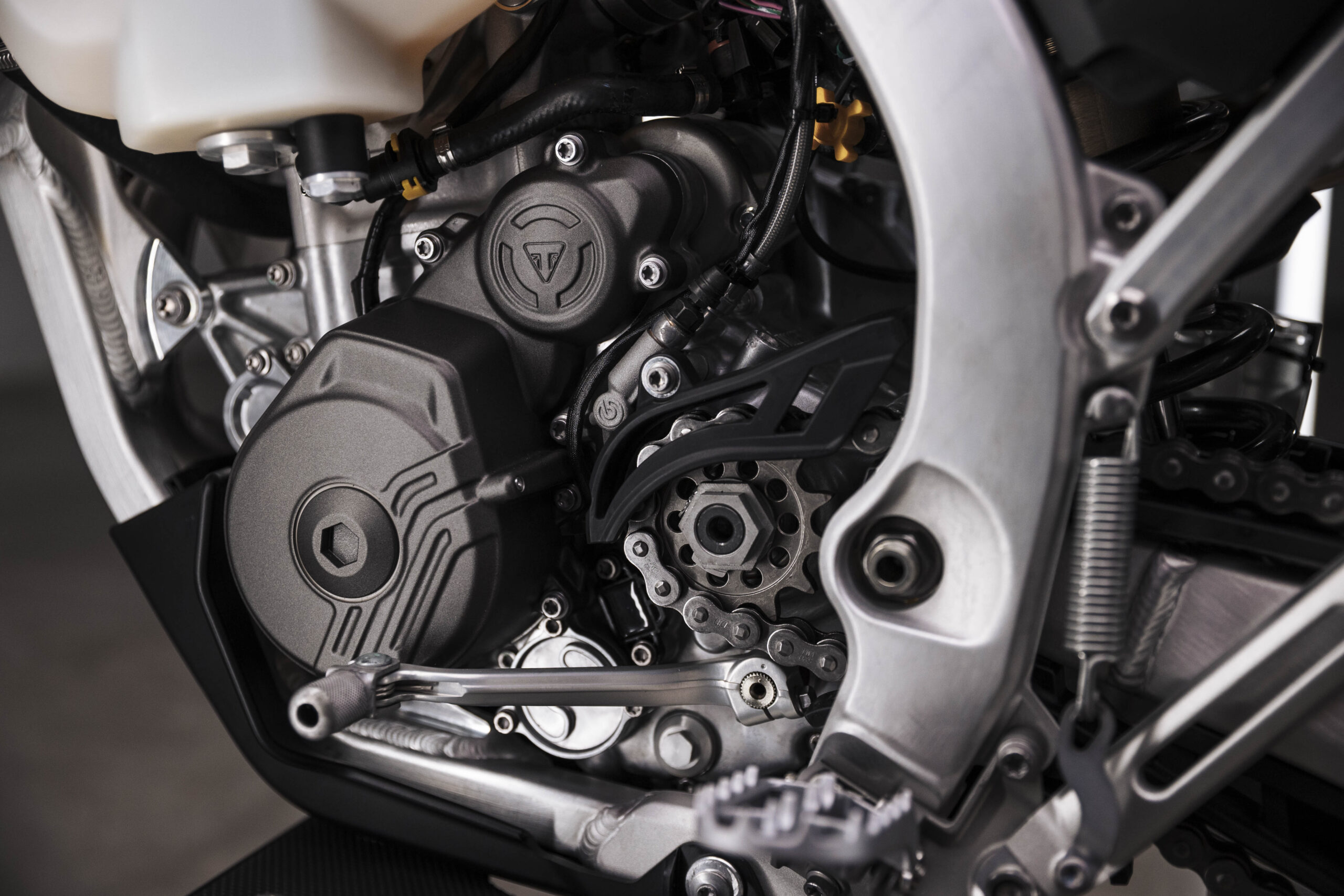
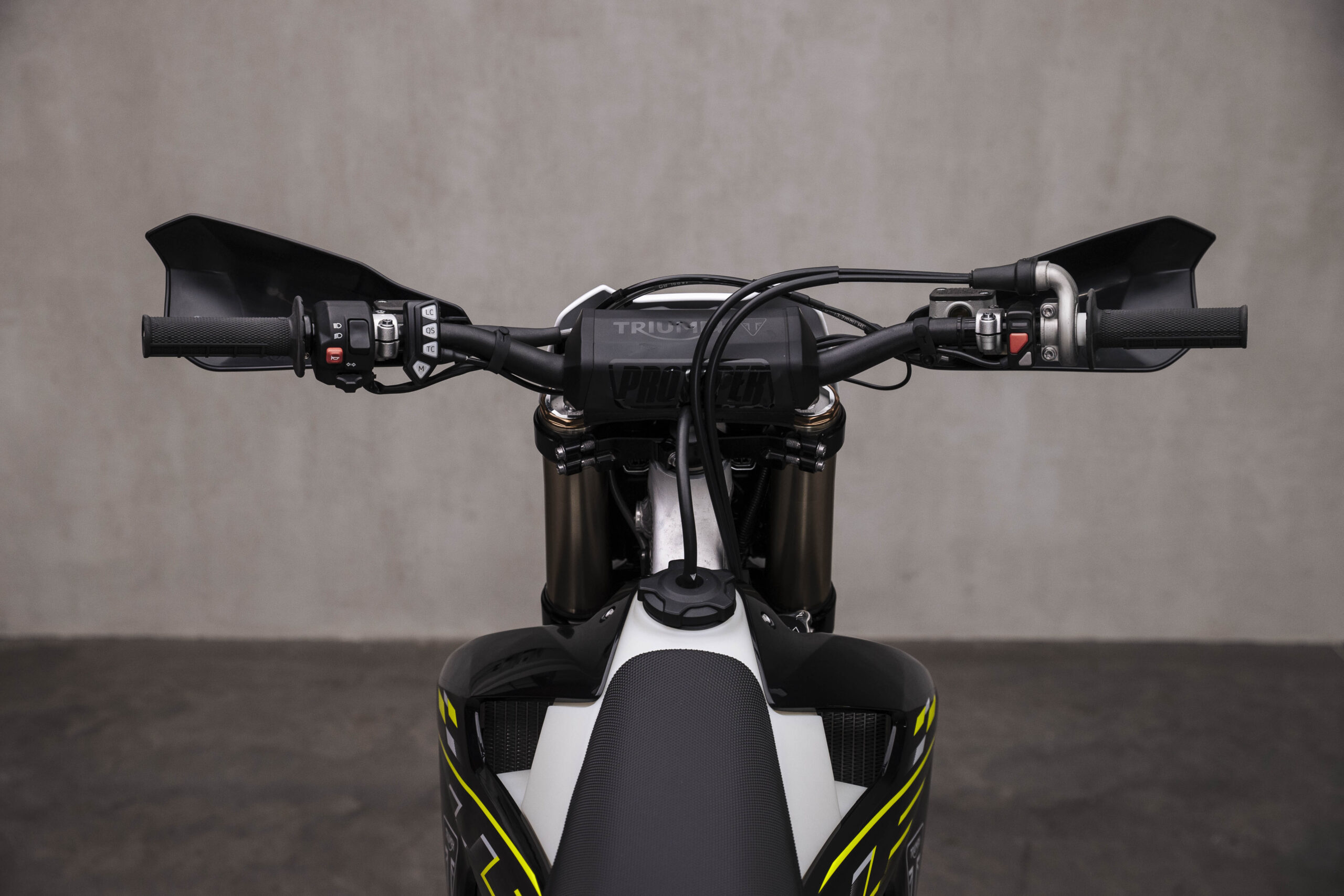
As you’d expect, the enduro bikes come with obvious differences to the MX models: an 18-inch rear wheel, wide-ratio six-speed gearbox, larger-capacity clear fuel tank, headlight assembly, hand guards and bashplate, instruments and switchblocks, etcetera. Interestingly (and unlike many other brands), Triumph’s enduro models also get different bodywork from their MX cousins – tweaked radiator shrouds and a 25mm longer rear guard. On top of that, the TF-E models also get significantly more engine inertia (via crankshafts that have a whopping 30% and 34% more inertia than their 450 and 250cc MX-model counterparts, respectively), plus a slightly larger-capacity airbox, revised mapping, and different exhaust systems to meet noise emission regs. But what fascinated us the most was what wasn’t different – in particular, how the rolling chassis used for enduro and MX models remains virtually identical. Admittedly, the enduro models get a 10mm longer swingarm and 10mm shorter fork (designed to shift more weight onto the front-end for tight-terrain agility, but retain straight-line stability at high speed), but the rest of the alloy “spine and double-cradle” alloy chassis is identical. And not just the frame; the triple clamps, steering stem, engine mounts, shock mount and shock linkage are all interchangeable between enduro and MX models.
CAN YOU GET A TRIUMPH TECH-HEAD TO TALK US THROUGH THE DIFFERENCES IN MORE DETAIL?
Sure! Check out this revealing video with Triumph Australia’s Technical Manager, Shaun McCoy, where we drill deeper into exactly how Triumph’s enduro models differ from their MX-model cousins – in terms of component spec, power delivery, chassis geometry and suspension set-up.

You might also like...
Triumph
1 day ago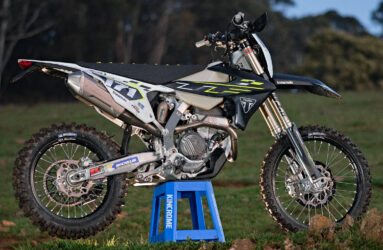
2026 TRIUMPH TF250-E: TECH TIPS
After putting more than 40 hours on our 2026 Triumph TF250-E project bike, Transmoto’s Sam Gray checks in with a few handy tech tips.
Triumph
3 weeks ago
FIRST LOOK: TRIUMPH’S 2027 TF250-X
Triumph’s MX2 title-winning TF250-X gets revised engine, clutch and suspension (and all-black bodywork) for 2027.
Triumph
1 month ago
HISTORY: FARRES & TRIUMPH TAKE WORLD MX2 CROWN
Triumph’s Guillem Farres seals the 2026 MX2 world title in Darwin – the British brand’s first ever World Motocross crown!
Triumph
1 month ago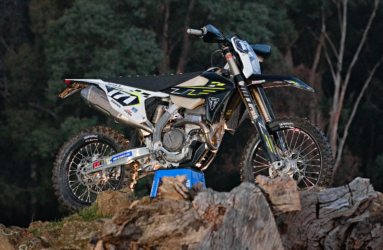
2026 TRIUMPH TF250-E: BIKE SET-UP TIPS
Transmoto’s Sam Gray runs through all of the mods he’s made to our long-term Triumph TF250-E project bike to get it enduro race-ready.
Triumph
1 month ago
TRIUMPH: ALL IN – EPISODE 1
Triumph’s first doc series, ALL IN, charts its off-road gamble – from a 2018 decision to an MX2 world-title fight.
Triumph
2 months ago
GUILLEM FARRES JOINS TRIUMPH’S MXGP CHARGE FOR 2027
Triumph Factory Racing confirms Guillem Farres will step up to the MXGP class from 2027.
Triumph
2 months ago
2026 TRIUMPH TF250-E: FIRST IMPRESSION
Transmoto test rider, Sam Gray, delivers his first impression of Transmoto’s latest long-term project bike; Triumph’s 2026 TF250-E.
Triumph
3 months ago
SUNDERLAND ADV PODIUM AT ROMANIACS
Sam Sunderland finishes runner-up in the Adventure Core class at Romaniacs.
Be the first to comment...