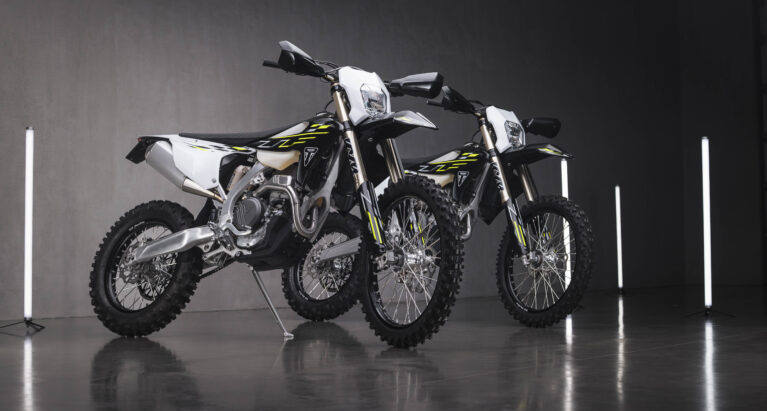
EXPLAINER: TRIUMPH’S COMPONENT SPEC
Ever since we threw a leg a leg over Triumph’s first ever enduro models at the bikes’ Aussie media launch back in June, barely a day goes by when we don’t field enquiries about the British manufacturer’s all-new 2026 TF250-E and TF450-E. Naturally, our first response is to direct people to the comprehensive piece we published in the wake of that launch, where we answered a slew of your FAQs about these new Triumphs; or to the 10-minute video that took our audience behind the scenes at the launch and captured our first impressions.
Somehow, though, this wasn’t enough for many of you, evidenced by the fact that we’re still being inundated with Triumph-related questions. So, we’ve decided to answer the most frequent FAQs, one at a time.
Let’s kick it off with your questions about the bikes’ component spec and cutting-edge technology…
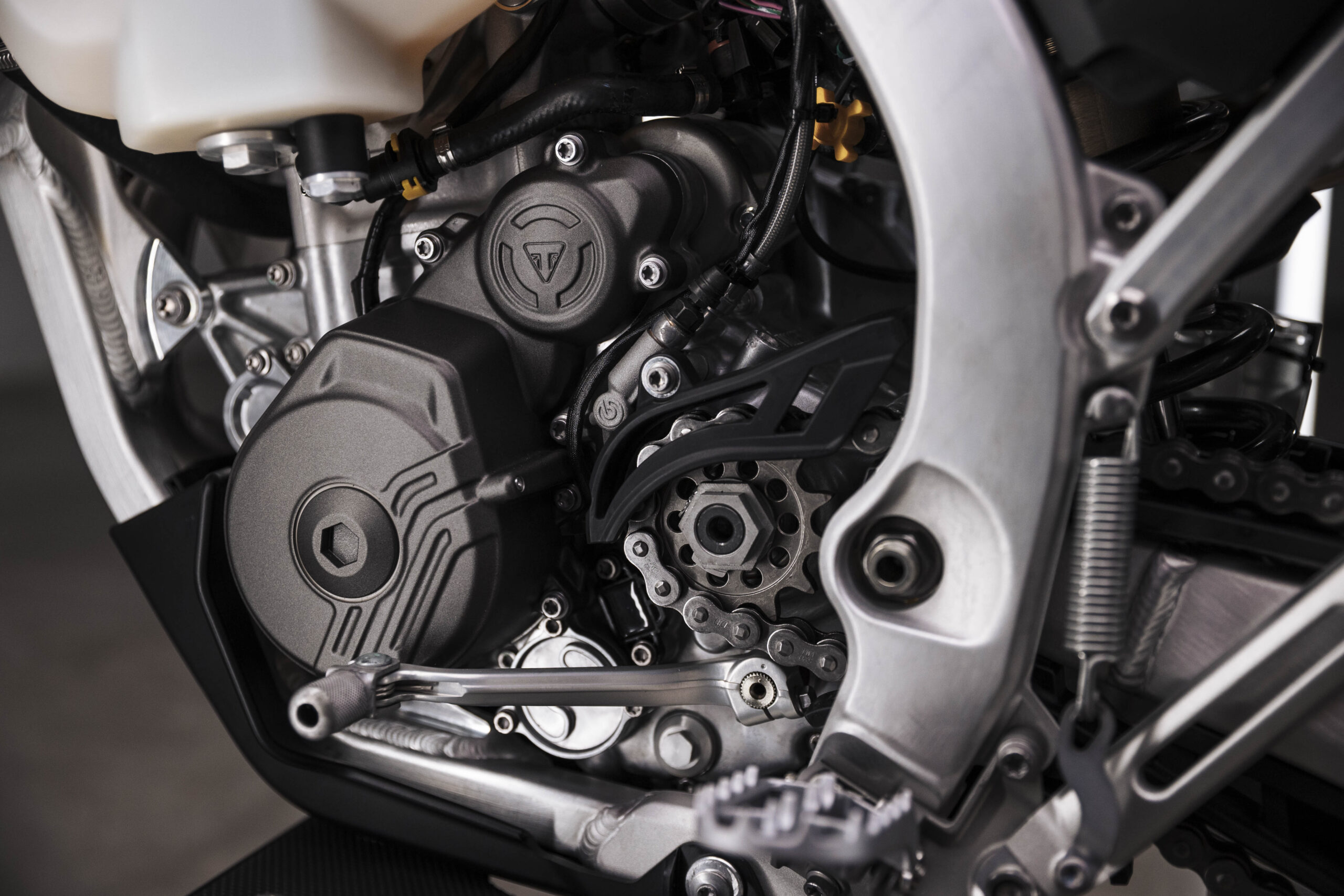
WHAT’S THE BIKES’ COMPONENT QUALITY LIKE?
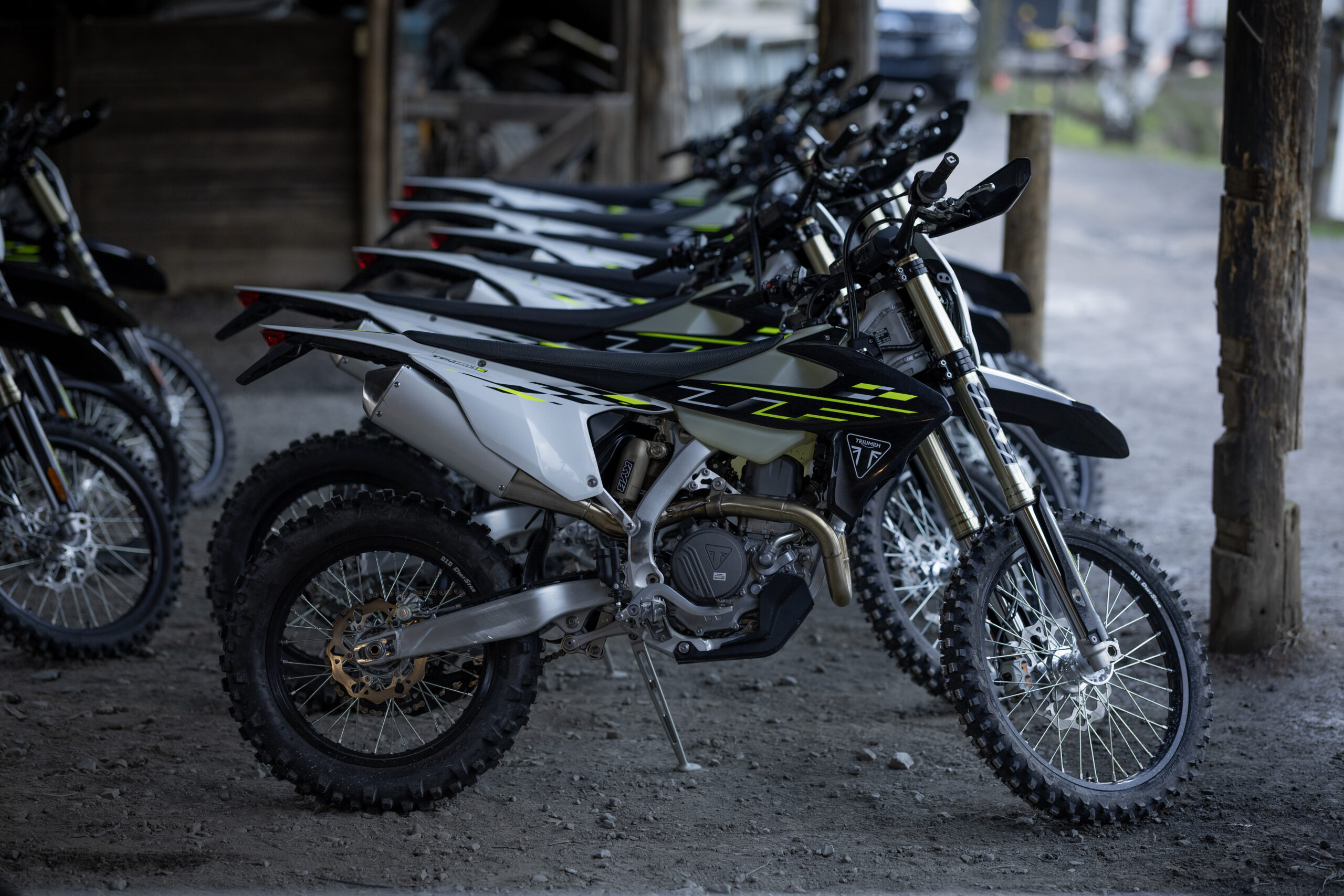
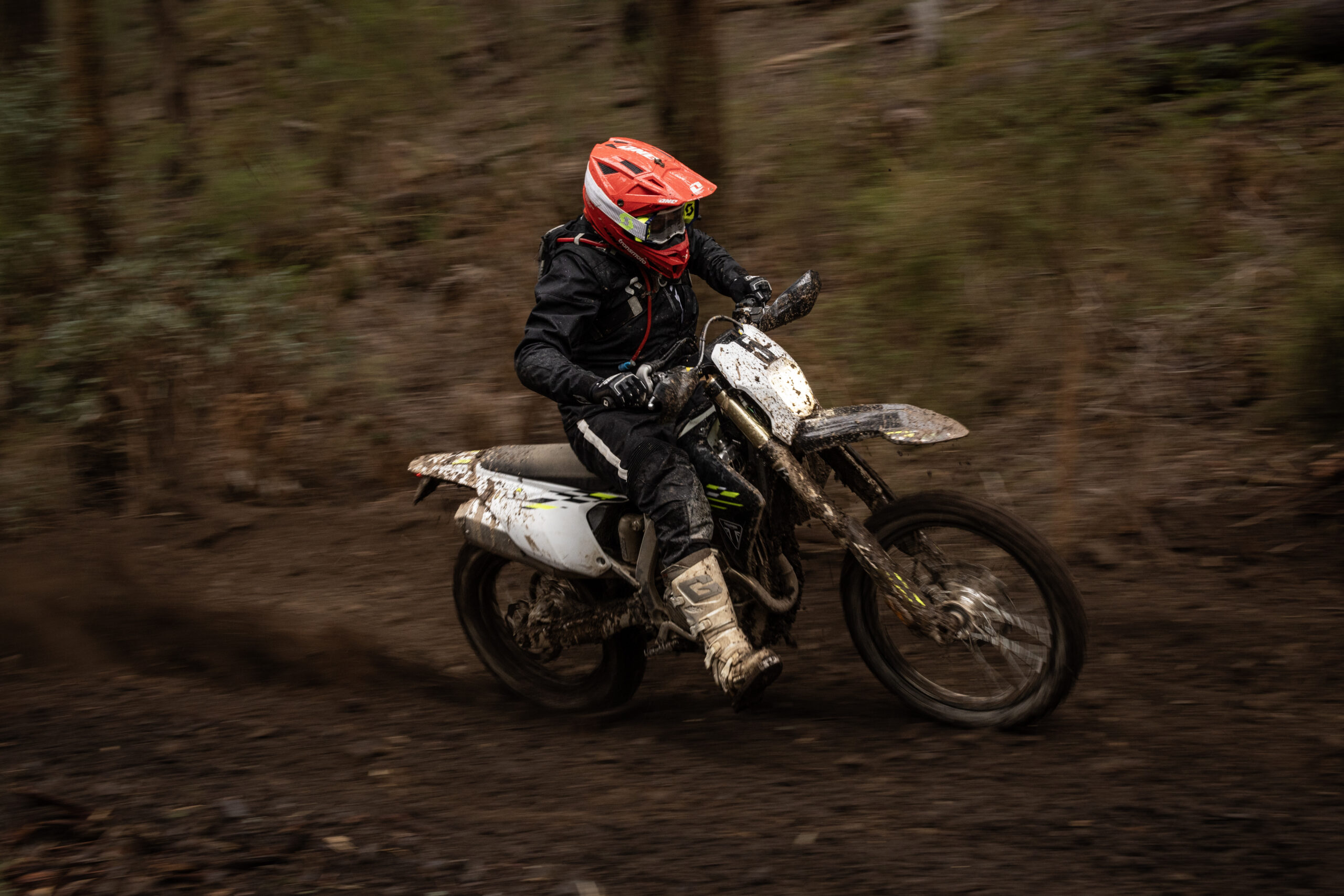
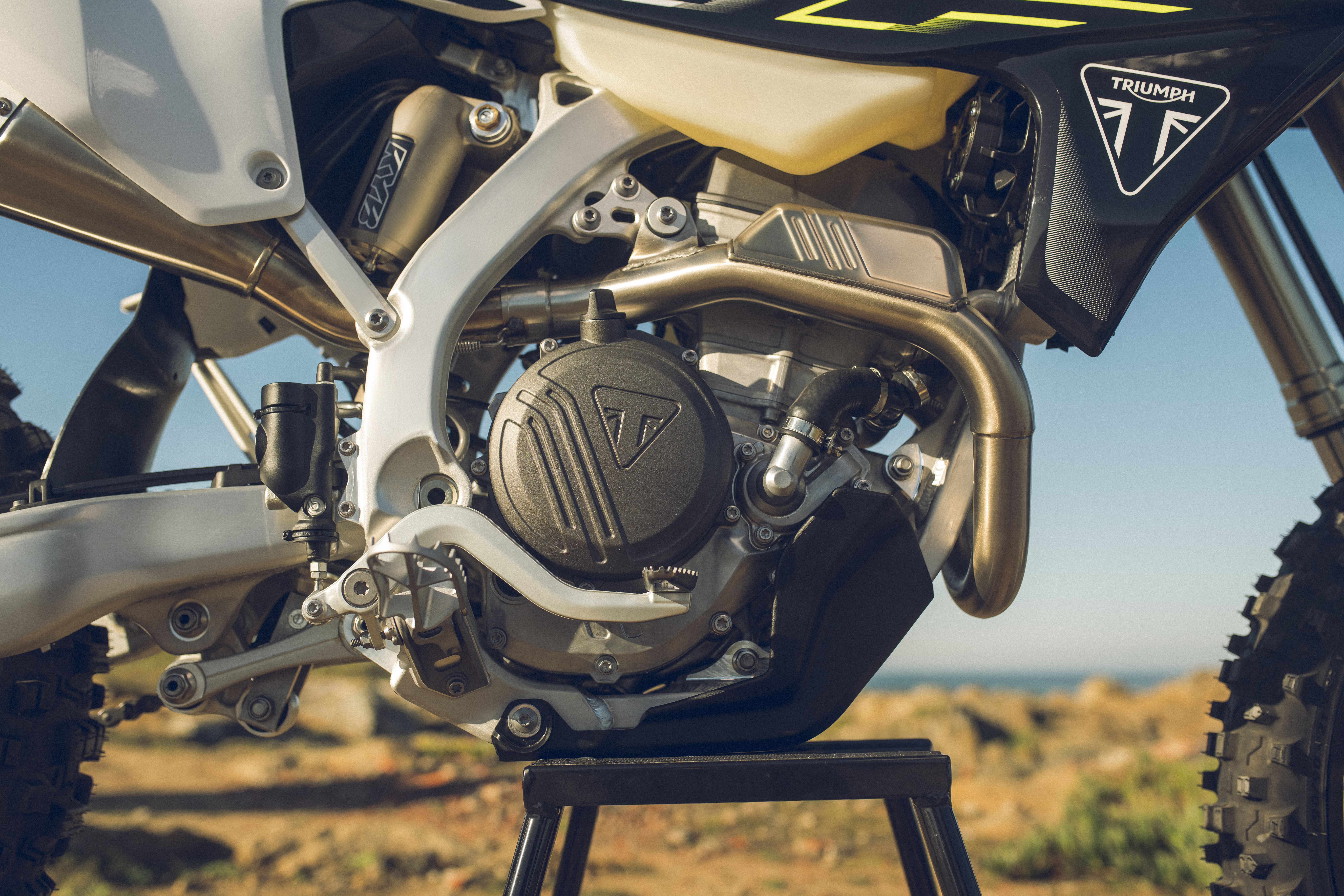
Honestly, it’s about as good as it gets! Everywhere you look, there’s premium-brand componentry and cutting-edge tech. And we’re not just referring to the high-spec Kayaba suspension package and Brembo’s hydraulic brakes and clutch. These machines also boast an Exedy racing clutch, Athena engine management system, Dell’Orto throttle body, forged König aluminium piston (with a three-piece oil control ring), Del West titanium valves, DID cam chain, Galfer brake discs, ProTaper handlebars, Neken triple clamps, DID DirtStar 7000 series aluminium rims (mated with Triumph-designed lightweight cast and machined alloy hubs), JT sprockets, Michelin Enduro 2 tyres, Pyramid non-slip seat cover, ODI grips, and dual-stage Twin-Air air filter. You get the picture, right?! The instrumentation and bar-mounted switchblocks aren’t branded, but with their fancy backlit functionality, they ought to be. They’re intuitive and feature illuminated buttons for quick, easy adjustments, while the digital speedo screen provides real-time data – including engine temperature, trip information and gear position.
Triumph’s design team repeatedly refer to the “no-compromise approach” they took with these machines, and it shows. Perhaps the premium-brand componentry edict was driven by guys like Paul Edmondson and Ivan Cervantes – four- and five-time World Enduro Champions, respectively – who these bikes were developed in close collaboration with. Or perhaps it’s just a Triumph thing. In any case, marry all that quality-brand componentry with Triumph – itself an iconic, storied brand – and, as one of Triumph Australia’s marketing guys said, “Yep, you’re cooking with damn good ingredients!”

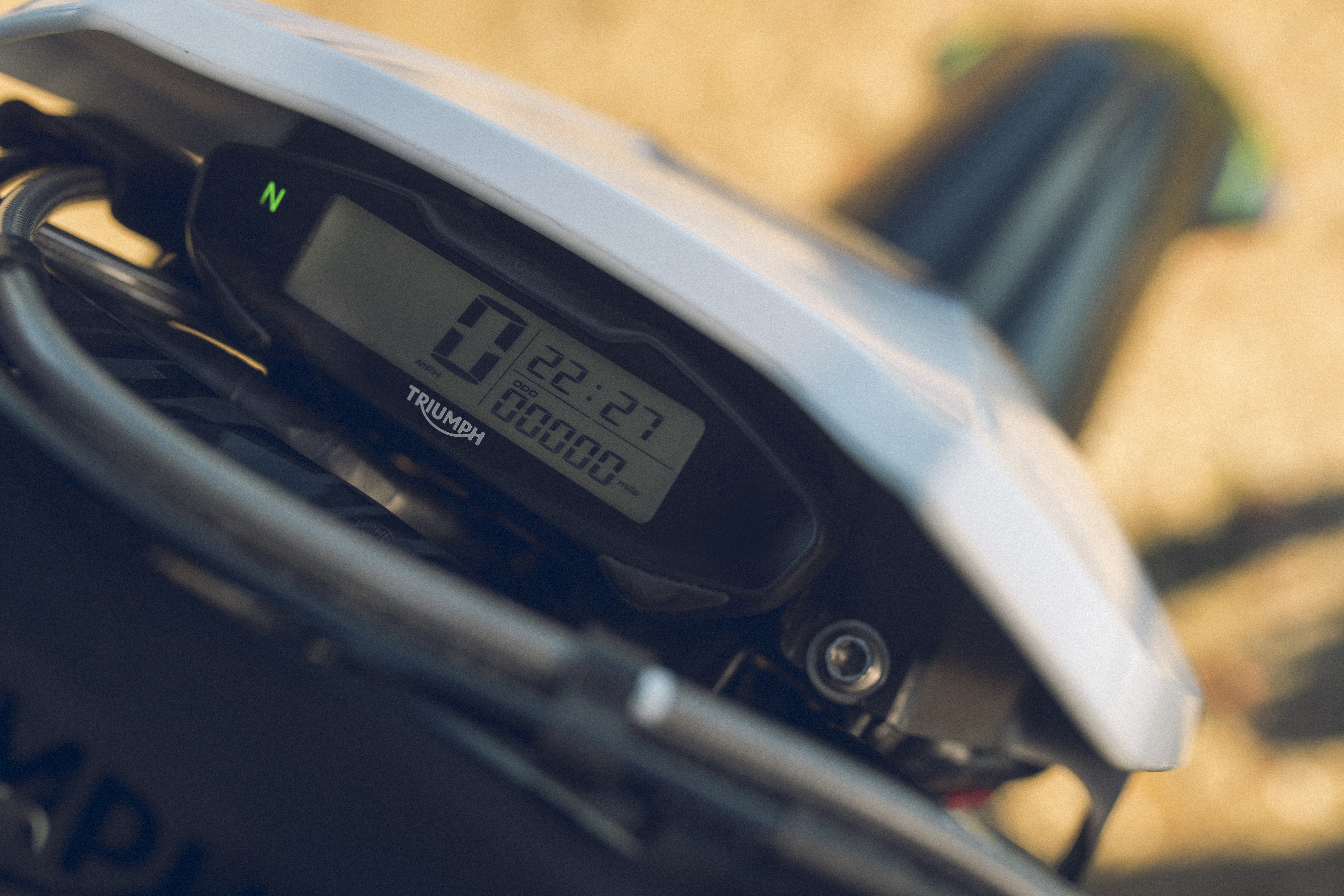
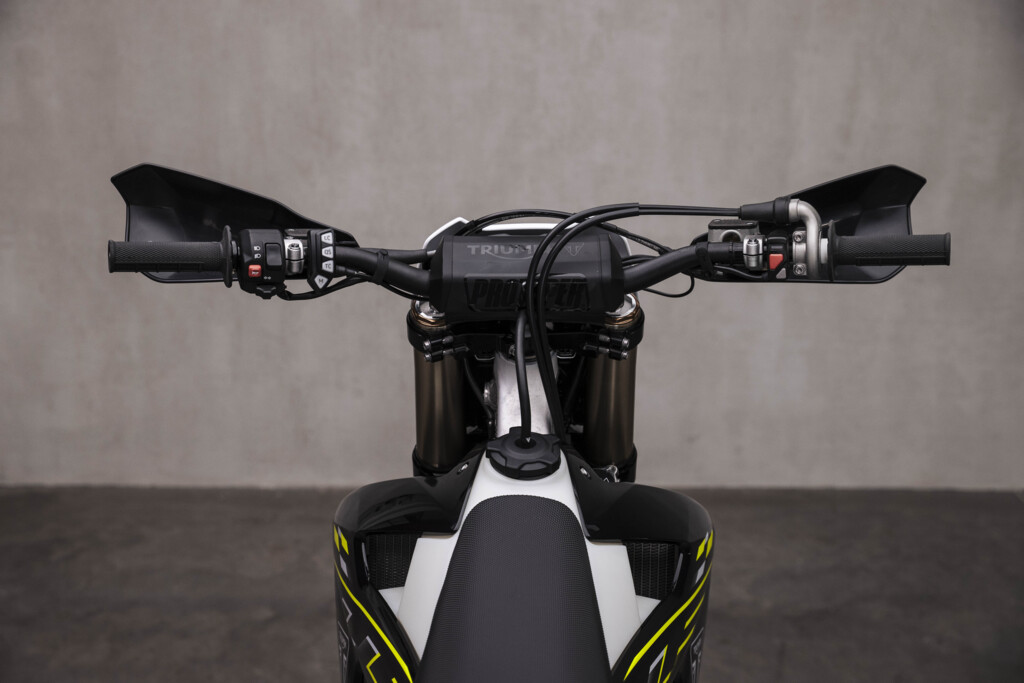
WHAT ABOUT THE CUTTING-EDGE TECH THAT TRIUMPH’S PR TALKS ABOUT?
One glance at the LHS bar-mounted switchblock confirms you’ve got the latest in off-road technology – and a broad range of adjustability – literally at your fingertips. The bundled, backlit and colour-coded buttons labelled “LC”, “QS”, “TC” and “M” give you on-the-fly activation (and deactivation) of Launch Control, Quickshift, Traction Control, and dual engine Maps, respectively. We weren’t able to spend a lot of time at the launch mucking around with these electronics, but quick back-to-back samples of each function (and engine maps) confirmed that the differences they make are substantial, not gimmicky. Sure, we’d expect the regular chorus of ‘purists’ who’ll argue these electronic aids are unnecessarily complicated, but why whinge about tech that gives riders the opportunity to instantaneously adapt to varying conditions? If you don’t like it, switch it off. By the way, with Triumph’s “MX Tune Pro” app (which will soon be available, along with the Accessory WiFi Com module), the level of adjustability made available to owners will be amplified significantly.
You might also like...
Triumph
3 days ago
GUILLEM FARRES JOINS TRIUMPH’S MXGP CHARGE FOR 2027
Triumph Factory Racing confirms Guillem Farres will step up to the MXGP class from 2027.
Triumph
3 weeks ago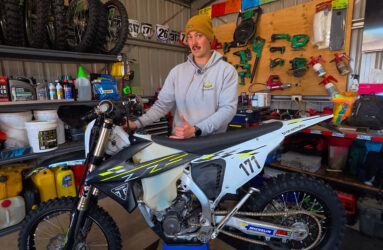
2026 TRIUMPH TF250-E: FIRST IMPRESSION
Transmoto test rider, Sam Gray, delivers his first impression of Transmoto’s latest long-term project bike; Triumph’s 2026 TF250-E.
Triumph
1 month ago
SUNDERLAND ADV PODIUM AT ROMANIACS
Sam Sunderland finishes runner-up in the Adventure Core class at Romaniacs.
Triumph
1 month ago
TRIUMPH’S TRIPLE THREAT FOR ROMANIACS
Triumph’s Jonny Walker, Sam Sunderland and Ivan Cervantes head to this weekend’s Red Bull Romaniacs.
Triumph
2 months ago
FARRES SEIZES MX2 TITLE LEAD AT FOXHILLS
Guillem Farres sweeps both motos at Triumph’s home Grand Prix to claim the MX2 World Championship lead.
Triumph
2 months ago
AUSTIN FORKNER ANNOUNCES RETIREMENT
The Triumph Factory Racing rider has announced his immediate retirement from professional racing.
Triumph
2 months ago
TRIUMPH’S FARRES DOMINATES PORTUGAL
Triumph Factory Racing’s Guillem Farres dominated MX2 at the MXGP of Portugal with a double victory.
Triumph
3 months ago
JONNY WALKER TARGETS ERZBERG SUCCESS
Triumph Factory Racing’s Jonny Walker returns to the Erzbergrodeo this weekend aboard the TF 250-E.
Be the first to comment...