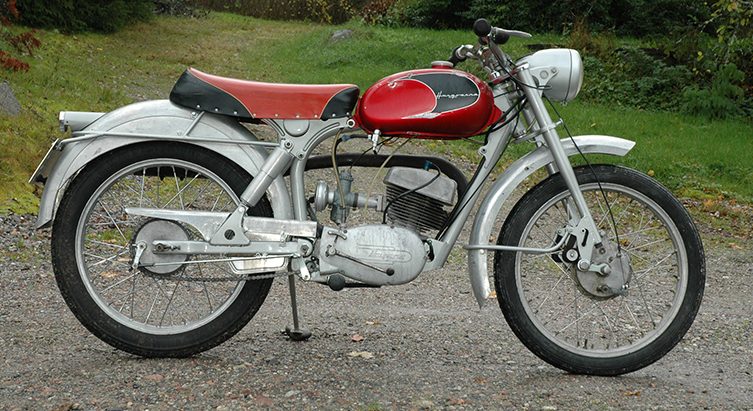
History: Husqvarna’s Silver Arrow

My first and only motocross bike was of course a Husqvarna, developed from the Dream Machine, which had first seen the light of day back in 1953. Despite good intentions, I never became successful on the track, but I remember as a kid dreaming of reaching the top of this gruelling sport. My neighbour had bought a used Silver Arrow, which I had the privilege of trying out in the dark woods around the western Stockholm area where I grew up.

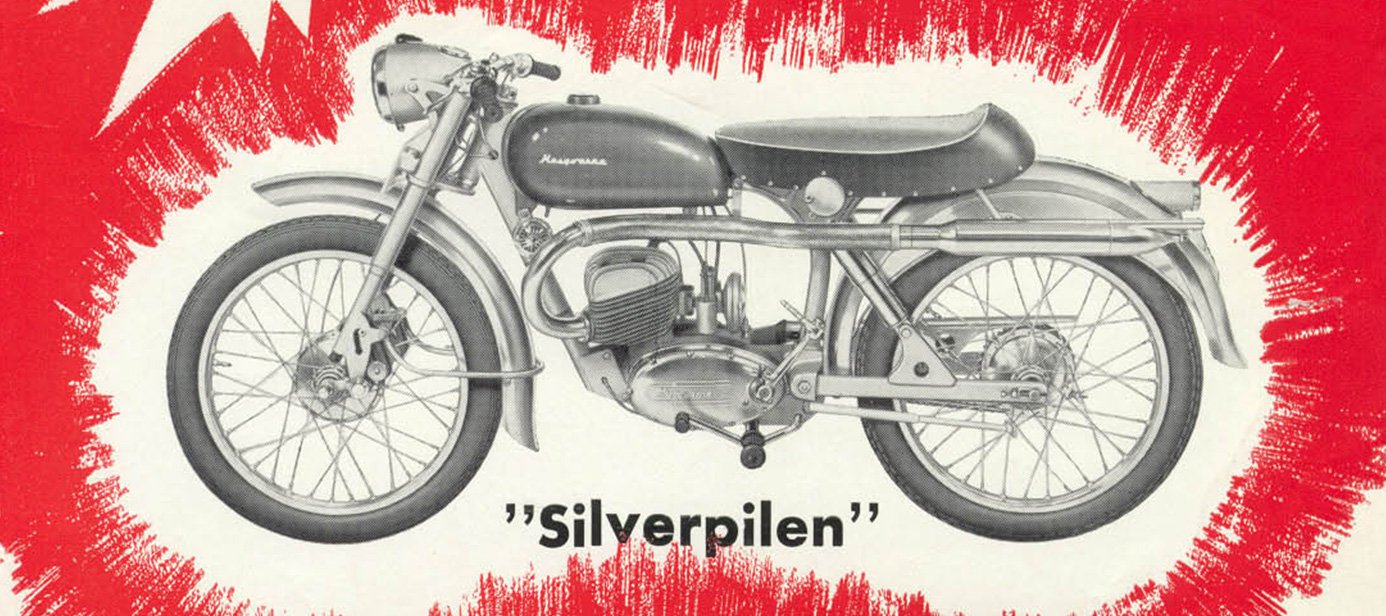
Since the Dream Machine never sold to expectations, a new motorcycle was introduced in January 1955, stealing the name “Silver Arrow” from Mercedes successful four-wheeled racers. It was sales director Harald Carlström who baptised this embryo, since he was both a motorsport man and drove a Mercedes. The newcomer had exactly the right styling to tempt many a youngster to become a motorcyclist over the next decade. Actually, the Huskvarna factory benefitted over almost twenty years from income and developments that could be traced back to the Silver Arrow. A common joke was that the weapons factory reloaded its guns from releasing a silver-plated arrow to shooting a silver bullet through the air. All in all, 11,300 units were produced between 1955 and 1965 in the province of Smaland, before sales then stopped.

The model name consisted of the three tiny figures 282, which later had the extra tag of an “E” on the refined versions for export. Crucially, according to Swedish law restrictions, the new machine had a weight just below 75 kilos, which was the legal formality for using a “Lightweight Machine”. In this weight classification both equipment and a full tank of petrol were included in order to make the bike legal for 16-year olds with a riding license. The law was actually counter-productive and bureaucratic as the factory was inclined to use lightweight, budget components in order to reach the 75-kilo-limit. Consequently, the factory had to use two-ply tires, under-powered brakes, a frame that was not up to standards for the potent engine and finally front forks that were more like rubber bands with poor damping characteristics.
The following statements are an excerpt from the Silver Arrow book of instructions: ‘During the running-in period of this vehicle, the engine should always be allowed to work easily, i.e. shift down over hills and heavy conditions. The workload on the motor should never be strained. The running-in period for engines with hard-chromed cylinder-walls is 4-5,000 kilometres and you will not get full performance before this distance. The abrasion in the cylinder is normally not more than 0.004 millimetres over 10,000 kilometres of riding”.

One of the men behind the work was Carl Heimdahl. His background with Husqvarna went way back as he had both ridden races for the factory as well as being a test rider with deep knowledge in the mysteries of research and development. Having an education as an engineer with a master’s degree, Carl Heimdahl came to Husqvarna in the thirties with excellent technical knowledge. Another engineer behind the scenes was Olof Edlund, who worked a lot for this investment. Further names in the project were the constructor engineers Ruben Helmin, Allan Kastberg and Egil Skoog.

A test protocol from the Royal Technical University, KTH, was performed by the end of January in 1952. This engine reliability try-out was performed during various conditions. Primus motor Carl Heimdahl in power source development was of course present at KTH in Stockholm. This all happened before Olof Edlund came to the engine laboratory. The tests were done in the cold room at the institution for combustion technique with the aim to establish adequate greasing for clutch and gearbox. Minus 30 degrees Celsius was set as a standard. It was an interesting and satisfactory conclusion that the goods withstood this coldness without problems. It was noted that the throttle was sluggish and that neither the lighting nor the signal worked at this freezing temperature. The Husqvarna people were thorough in the development stage and it is no coincidence that the material was up to standards. Their homework had been done right from the start.
Related Content
TESTED: HUSQVARNA’S 2019 MX RANGE
You might also like...
Husqvarna
3 weeks ago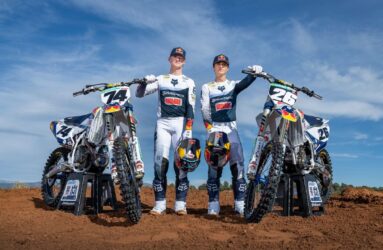
HUSKY EXTENDS WITH DE WOLF & NESTAAN
Husqvarna Factory Racing has signed new multi-year agreements with Nestaan and MX2 Champ’ Kay de Wolf.
AUSENDURO HEADS TO KEMPSEY
The Yamaha Australian Enduro Championship heads to Kempsey this weekend for Round 9 and 10.
Husqvarna
3 weeks ago
TODD WATERS CALLS TIME ON CAREER
Todd Waters closes out his decorated pro motocross career with a top-five finish in the 2026 MX1 standings.
Husqvarna
2 months ago
HUSQVARNA 2027 ENDURO RANGE REVEALED
Husqvarna trims its enduro range to five proven models for 2027.

HIGHLIGHTS: 2026 TRANSMOTO 8-HOUR AT NARRABRI, POWERED BY KTM
Check out the highlights video from the 2026 Transmoto 8-Hour at Narrabri, NSW, powered by KTM.
Husqvarna
2 months ago
HUSQVARNA’S 2027 CROSS-COUNTRY RANGE
Husky’s 2027 TX300 and FX350 cross-country models arrive in September with updated aesthetics.
Husqvarna
3 months ago
Highlights: 2026 Transmoto 8-Hour at Miva Station, powered by Husqvarna
Check out the highlights video from the 2026 Transmoto 8-Hour at Miva Station, Qld, powered by Husqvarna.
Features
4 months ago
WATCH: Billy Bolt The Documentary 3
Bolt’s latest doco follows his sixth SuperEnduro title and the mindset driving his continued dominance.
Be the first to comment...