Profile: Husqvarna’s Jon Hafey
How has Husqvarna managed market-leading growth figures in Australia during 2017, while a majority of their rivals’ sales have been in decline? We spoke with the brand’s National Brand Manager, Jon Hafey, for a candid insight.
In the four years since KTM bought Husqvarna from BMW, the Swedish-born brand has taken giant strides forward. The ’revitalised’, Austrian-made Husqvarna has increased sales and market share massively all around the world; they’ve expanded their model range in mini, motocross, enduro, adventure and road bike market segments; and they’ve racked up several AMA and world titles. By anyone’s standards, this modern-day resurrection of the ‘pioneers of motocross’ has been an amazing success story.
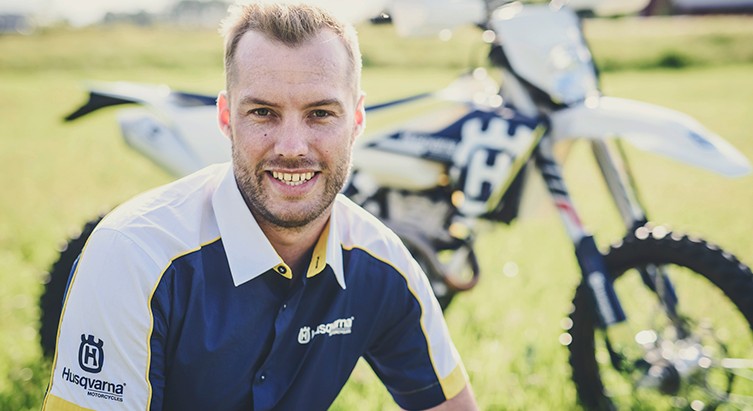
But who are the key people behind the brand in Australia? Well, in addition to its well-known General Manager, Jeff Leisk, there’s a raft of passionate Huskofiles. But the bloke whose shoulders bear more Husqvarna weight than most in Oz is Jon Hafey. With 35 years’ experience in the industry, the 47-year-old Hafey is just at home telling you a hilarious yarn about painting the town red with the late Barry Sheene, as he is speaking about a teenage rider who’s talent has caught his eye at the local track.
Hafey is a hardworking, no-bullshit, quick-witted character with an easy smile and quirky sense of humour. So, in the wake of recent stats that reveal Husqvarna has bucked the industry trend, and grown by more than 20% in Australia over the past year, who better than Hafey to give us an insight into the brand’s success and future aspirations?
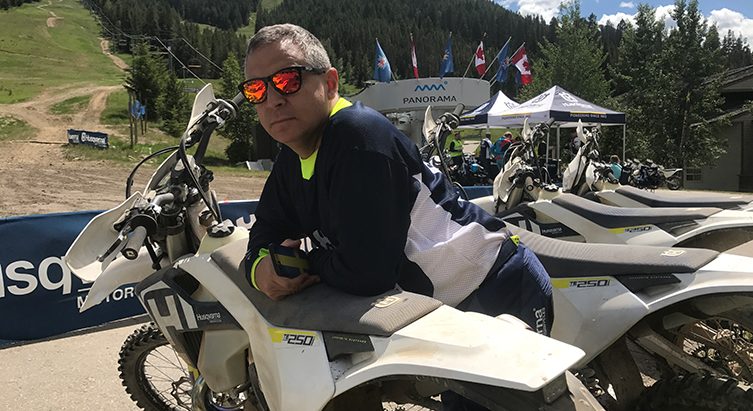
^ (Left to Right) ‘André the Giant’ and Jon Hafey.
TM: Would it be fair to say you’ve been an industry ‘lifer’, Jon?
JH: Yes [laughs]. I’ve been in the game since I was 13. I worked Thursday nights and Saturday mornings at Royal Kawasaki in Toowoomba. The owner there, Noel Royal, was like a second dad to me. I didn’t like school much, but I loved bikes. So if I wasn’t at school or racing, I’d be at the shop. I worked there until I finished school in Year 10, when Noel got me a job nearby at SKF Bearings. I really wanted to be a mechanic, but they thought I had more potential in the front-end of the business. I wasn’t over the moon about being a 15-year-old clerk with SKF, but I learned a lot about the workings of a business without realising it at the time. I did everything from stock control to invoicing to petty cash to banking. Everything was hand-written and in triplicate back then.
And in the 30-odd years since?
Well, I’ve probably been involved with the wholesale side of the industry more than anything else. I did nine years on the road as an accessories rep or state manager for Cassons, Ficeda and McLeods. And I’ve now been involved with motorcycle wholesale for 10 years. In the mid-2000s, I worked for Yamaha for three years, and then three years at Honda at the end of that decade. And I’m about to begin my fifth year here at Husqvarna. I began with the company in January, 2014, which was shortly after the brand was bought by KTM and started production out of the factory in Austria.
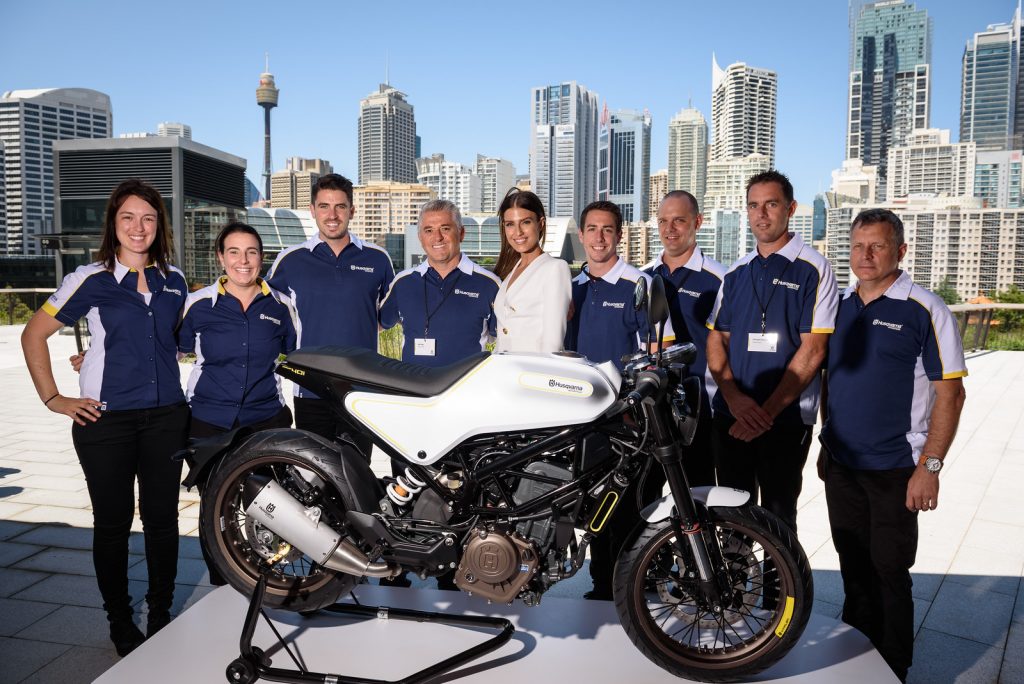
^ (Left to Right) Rosie Lalonde, Alana Barrato, Scott Tweedie, Jeff Leisk, Erin Holland, Lewie Landrigan, Nathan Crawford, Christian Horwood, Jon Hafey.
Very few of KTM or Husqvarna’s staff relocated in January, 2017, when the business moved from Perth to Sydney. Your move from Queensland wasn’t quite as far, but it’s never easy to uproot a young family and move, is it?
No, it’s not. It was a huge decision for us. We were very settled in Toowoomba, but we had lived on the Sunshine Coast for 15 years, so I’m not averse to living elsewhere. I’m an avid motorcycle and BMX collector, so that was actually one of the hardest things to leave behind. But the opportunity with Husqvarna was just too good to pass up, and we’re very glad we made the move.
How does the culture at Husqvarna differ from other manufacturers you’ve worked with?
Let’s just say it’s the polar opposite to the ‘big four’ Japanese manufacturers. There’s a determination and aggression to be market leaders. It’s very nice to be involved with a company who’s got such a heritage in the sport and at a time when they not only have big aspirations, but are also moving very quickly towards their objectives. Unlike some of our competitors, who have a very limited range of models in off-road market segments, Husqvarna has a huge range of two- and four-strokes models across mini, motocross, enduro, cross-country, adventure and road bike market segments. The company is investing heavily to meet their growth targets, so it’s more a case of buckle up and hold on for the ride [laughs].
Does that determination to succeed start from the top; from Husqvarna’s General Manager, Jeff Leisk?
It does. Of course, Jeff’s racing career was infinitely more successful than mine, but we share an extremely competitive racing mentality. And being similar in the way we think means we’re usually on the same page with business strategy.
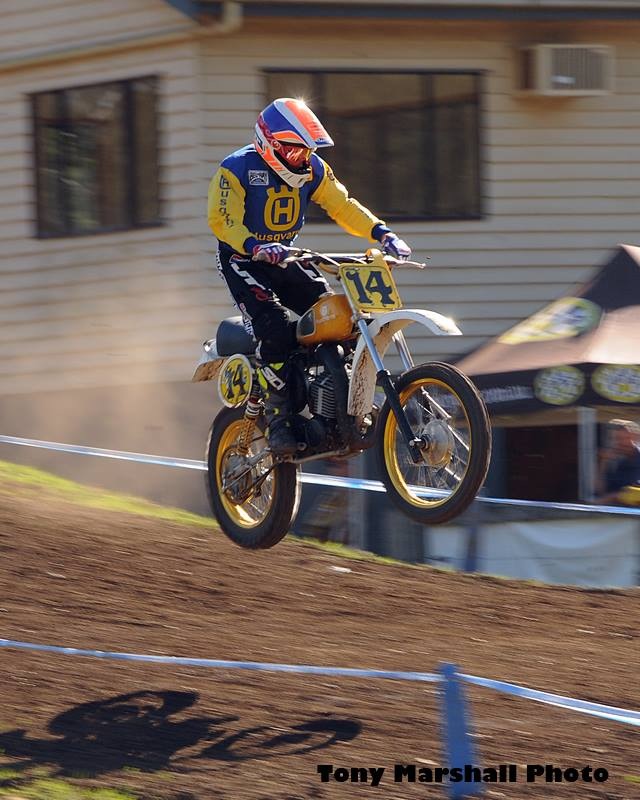
Wait on, Jon. Your racing achievements are nothing to be sneezed at!
I won a few state motocross championships as a kid, which isn’t saying much. Though I am proud of the fact I scored podiums at national championship rounds in three different disciplines – road racing, supermoto and dirt track.
Brand Manager is a very broad job title. What does it entail?
I’m responsible for Husqvarna’s brand growth and dealer network development. I help coordinate our race teams. I forecast. I order the bikes from the Austrian factory. Basically, all things Husqvarna.
With KTM and Husqvarna sharing an office and several personnel here in Australia – just as they do in Austria – is there a healthy in-house rivalry between the two brands?
There is. And I think it’s a very positive force for the business – just like any situation where your competitor is also your teammate. We respect and look out for each other, and collaborate when it makes sense to. But it also brings out the competitive spirit in people.
Does that rivalry also force Husqvarna to focus on, and leverage, how its product differs from KTM?
Absolutely it does. It’s a huge advantage for us to be able to get a snapshot of the marketplace from two different brands’ perspectives. Just four years into the new-look Husqvarna, we can see that there’s a clear difference in the two brands’ customers.
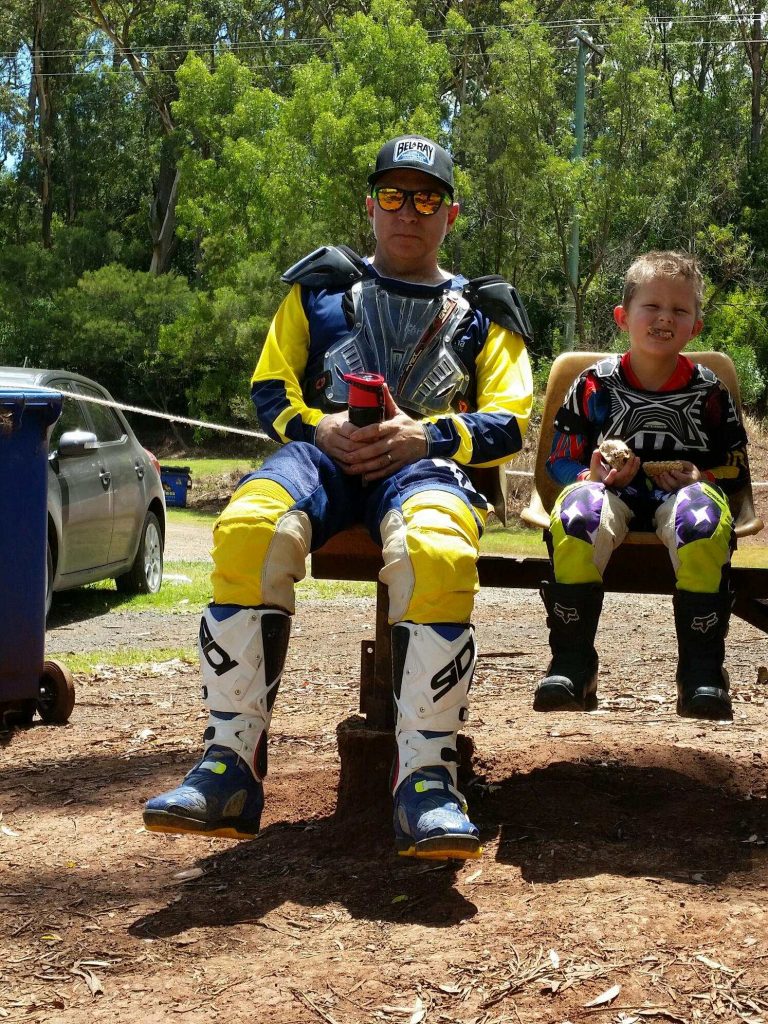
Husqvarna reported an impressive 22% growth in sales in the past 12 months, while a majority of its rivals’ sales have fallen. Where has that growth come from primarily?
I’ve recently returned from the importers’ meeting in Milan, where we were privy to a lot of growth stats. What I can say is that the brand’s growth in Australia is significantly larger than the international average. Our market share in Australia is also the biggest of all the importers around the world. In the past year, we’ve had strong growth – in terms of both sales and market share – in the mini and motocross segments. But our biggest year-on-year growth came in the enduro segment. To put that in perspective, we sold around 1400 2017-model enduro models.
What sort of growth are you projecting for 2018? And where do you think it’ll come from?
By the end of 2018, we expect our sales will exceed 3000 units in Australia, which is up from 2700 this year. Around 300 of those 3000 units will be road models (the Vitpilen 401 and 701, and the Svartpilen 401), while we expect a similar sort of growth trajectory from mini, motocross and enduro models. Absolutely critical to us achieving those targets will be ongoing dealer network development. Getting our 2018 RRPs right is also very important.
There also seems to have been a big push in Australia with Husqvarna’s 701 Enduro and Supermoto models.
There has, because we think those models big fill a really big gap in the market. We’re expecting to sell in excess of 250 units of those models.
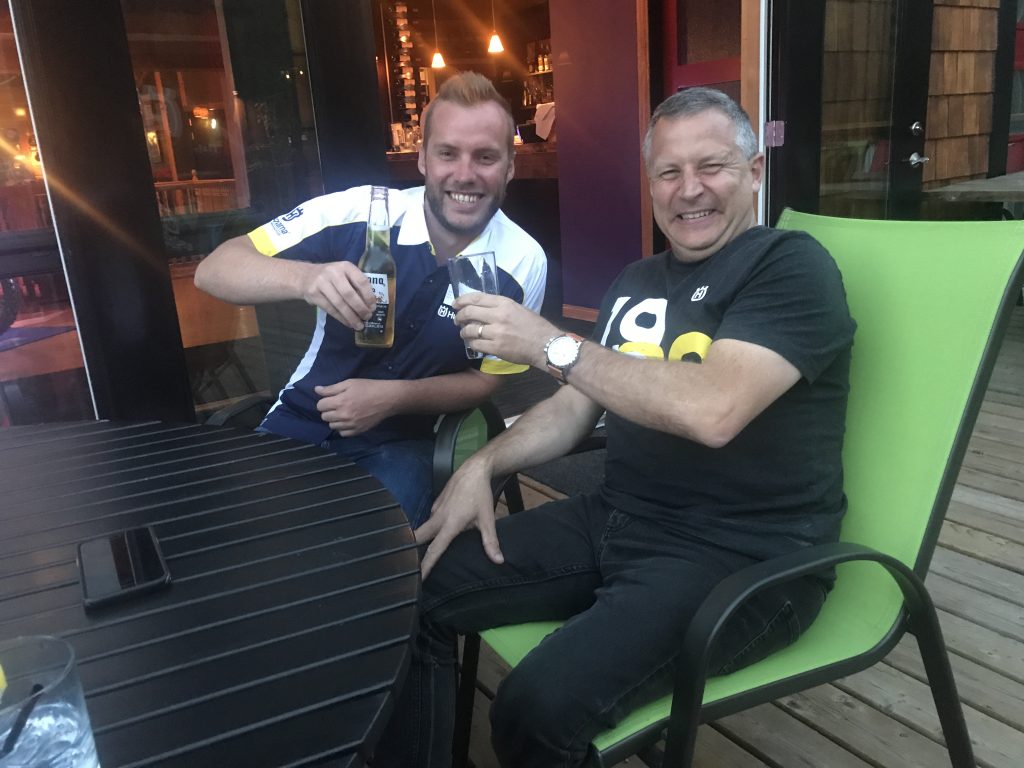
^ Husqvarna’s Product Manager, Justin Maxwell, and Jon Hafey enjoy an ale at the 2018 enduro model launch in Canada.
For 2018, the market’s focus has been on the all-new, fuel-injected two-stroke models released by Husky and KTM. With the split production run, you’ll effectively have carb and EFI two-strokes in dealers at the same time. So how did you weight the relative order sizes for the 2018 TE and TE-i models?
In round numbers, 60% of our 2018 TE250 and TE300 models will be carb bikes, and 40% will be EFI.
Does that reflect some doubt about the new TPI (Transfer Port Injection) technology?
Not at all. Six months ago, the decision to order the two-strokes in that 60/40 ratio was based on our perceptions of how consumers would embrace the all-new injected two-strokes. In hindsight, I may have got that wrong. The ongoing evolution of the mapping for these new bikes has improved their performance significantly since the media sampled the bikes at the international launch in Canada back in July.
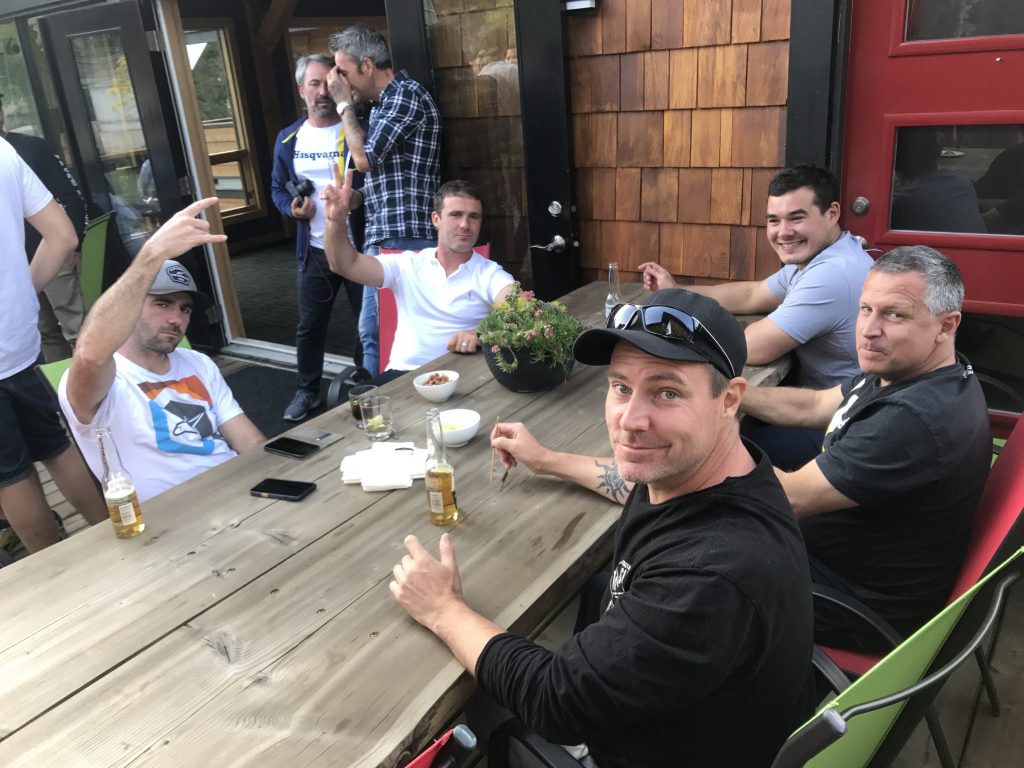
When I looked over your shoulder at the breakfast table there in Canada, you were signing off on an order of several thousand units of 2019-model bikes, which means tens of millions of dollars? Do decisions and investments of that magnitude rattle you?
In addition to the previous few years’ sales trends, we have a lot of market research data on which to base our forecasts and decisions. That said, it’s not always easy to place orders with the factory so far ahead, and sometimes you need to take a shy at the stumps [laughs]. People often don’t realise that, in order for the factory in Austria to facilitate and plan their production, we actually need to order bikes a year-and-a-half ahead. So it’s quite easy to get a mix a bit wrong and have a 100-unit problem. Once you make a commitment to the product, though, you simply have to go out and find a way to facilitate that. You just have to back yourself, your team and your dealer network.
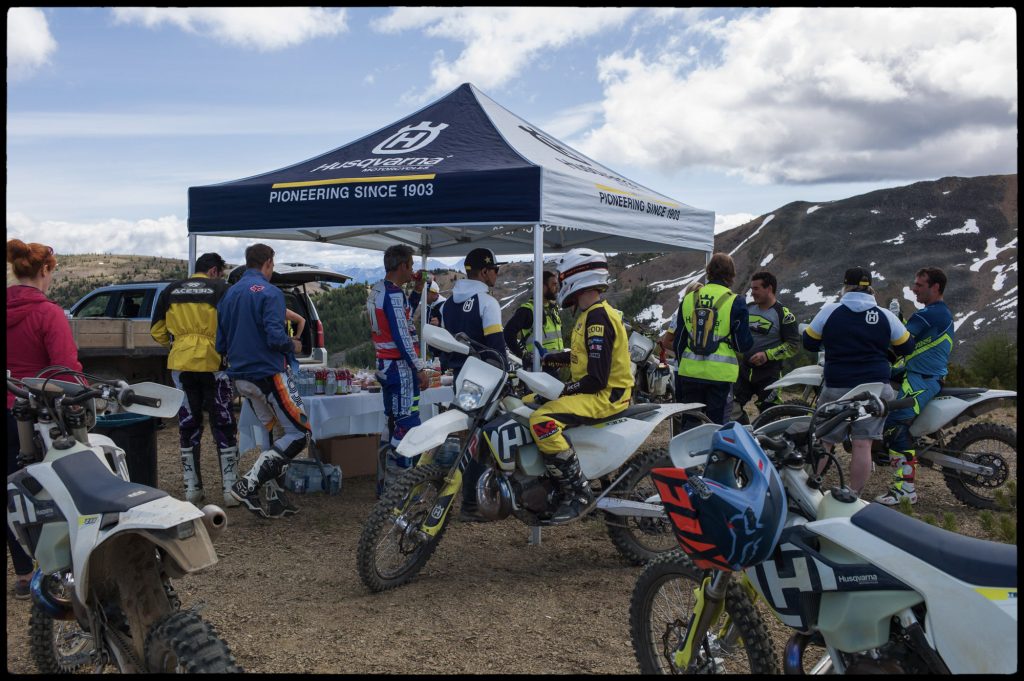
The fuel-injected two-strokes were always due to start arriving in Australia in January, but we’re hearing reports the rest of the range has been a little slow in arriving in the numbers dealers were expecting.
Due to global demand, we have had some delays with specific models. The first shipment of 2018 bikes arrived in August and we’d sold out of all 2018-model four-strokes by mid-November. We’ve recently received another shipment of FE350s and 501s. and we do have 2018 two-strokes in stock. It’ll be very interesting to see the take-up we get with the new fuel-injected two-strokes in January.
Related Articles
2018 PRICING: KTM VS HUSQVARNA
You might also like...
AUSENDURO HEADS TO KEMPSEY
The Yamaha Australian Enduro Championship heads to Kempsey this weekend for Round 9 and 10.
HIGHLIGHTS: 2026 TRANSMOTO 8-HOUR AT NARRABRI, POWERED BY KTM
Check out the highlights video from the 2026 Transmoto 8-Hour at Narrabri, NSW, powered by KTM.
Interviews
4 months ago
JOHNNY O’MARA: BROTHERS MEAN BUSINESS
O’Mara talks Jett’s injury return, Hunter’s supercross heartbreak, and what to expect at Fox Raceway.
Cassons
4 months ago
SETH HAMMAKER: READY FOR FOX RACEWAY
The Pro Circuit Kawasaki rider talks his 250SX East season, outdoor goals, and why he loves Fox Raceway.
Features
4 months ago
VIDEO: WHY GASGAS KEPT WP’S XPLOR FORK
WP’s XPLOR fork has evolved in recent years, but how does it compare with the XACT closed-cartridge fork?
Features
5 months ago
VIDEO: GASSER’S FIRST LE ENDURO MODEL
Just how different is GASGAS’s first limited-edition enduro model – the EC300 GP two-stroke?
Ducati
5 months ago
TESTED: DESMO450 MX FACTORY EDITION
Ducati’s race-ready Desmo450 MX Factory edition – how its premium components translate into performance.
Cassons
5 months ago
GIVI: ITALIAN SUCCESS STORY
A deep dive into the motorcycle luggage market with Givi’s Overseas Operational Director, Joseph Perucca.
Be the first to comment...