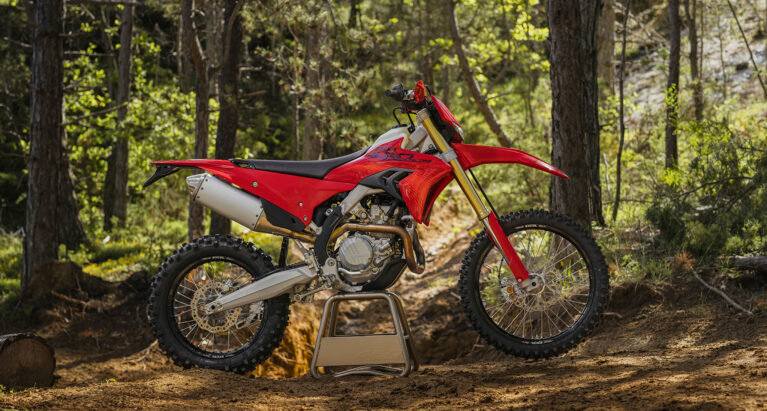
2027 DUCATI DESMO450 EDS – DETAILS REVEALED
How has Ducati adapted its 450cc motocross model for enduro and cross-country use? Cleverly, is how! The Italian manufacturer has just released detailed info about its first ever enduro bike, the Desmo450 EDS, and where it differs from the Desmo450 MX whose platform it shares.
In late 2025, at Europe’s 2025 EICMA motorcycle show, Ducati unveiled a tantalising preview of its all-new 450cc cross-country and enduro machines, confirming intentions to broaden its off-road model line-up. Called the “Desmo450 EDS”, this all-new Ducati is hugely significant because it’s the 100-year-old manufacturer’s first ever enduro model. When the bike was first showcased at the EICMA show (and accompanied by a teaser video of its exhaust note), however, Ducati only offered scant information about the machine – other than the fact it was based on the Desmo450 MX, but with a larger (and clear) fuel tank; specifically tuned Showa suspension; dedicated wheelset (with an 18-inch rear); headlight, taillight and sidestand; instrumentation; and some off-road protection in the form of handguards and bashplate. And that left us all to speculate about how Ducati would go about adapting their Desmo450 MX for trail/enduro/cross-country use.
Thankfully, Ducati has now released detailed information about their all-new Desmo450 EDS which, according to Ducati Australia, is “expected to arrive in Australia and New Zealand in the fourth quarter of 2026 with a Suggested Ride Away Price from $17,725 AUD”.
Here’s an excerpt (and plenty of imagery) from the extensive information Ducati revealed…
DUCATI’S FIRST ENDURO BIKE
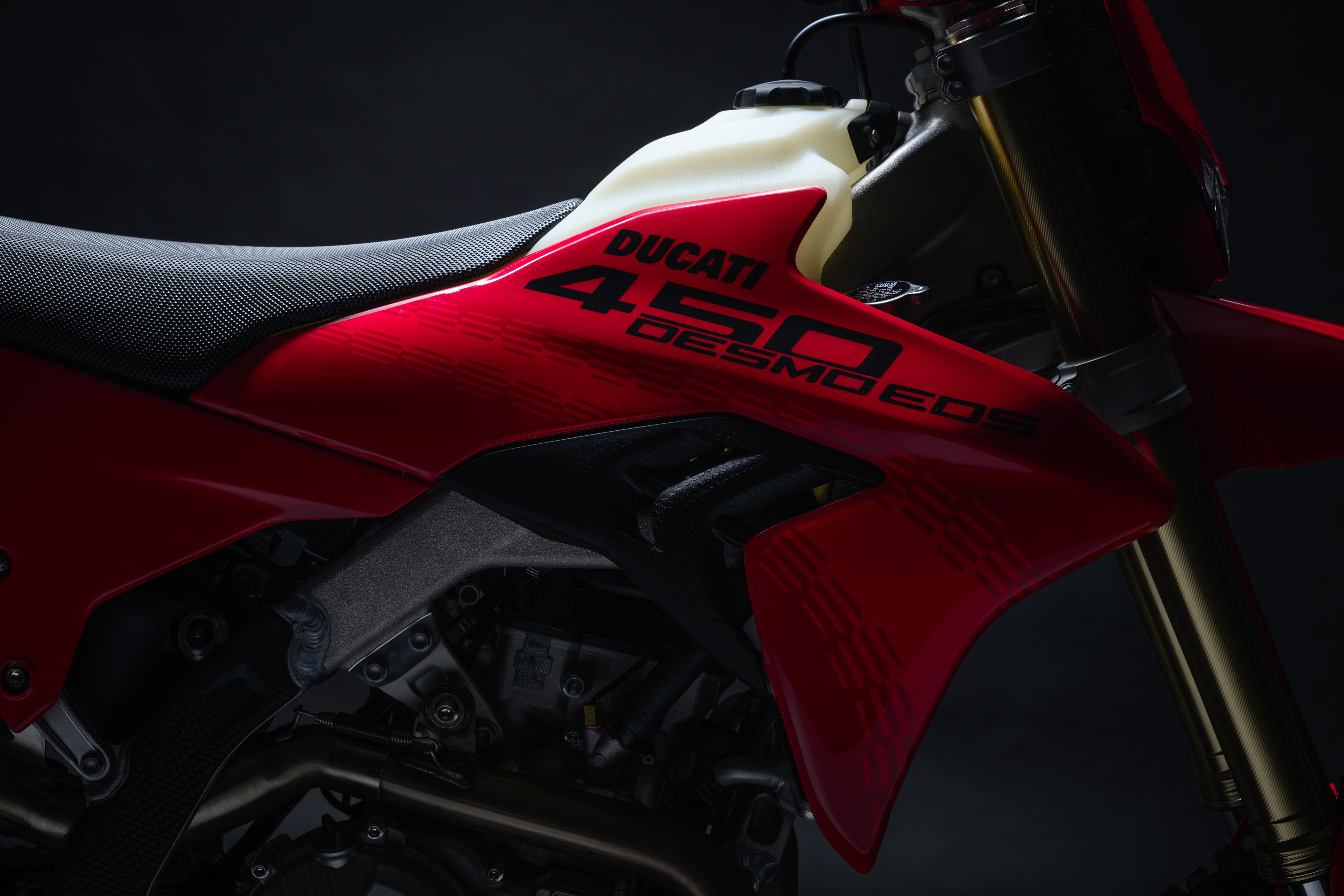
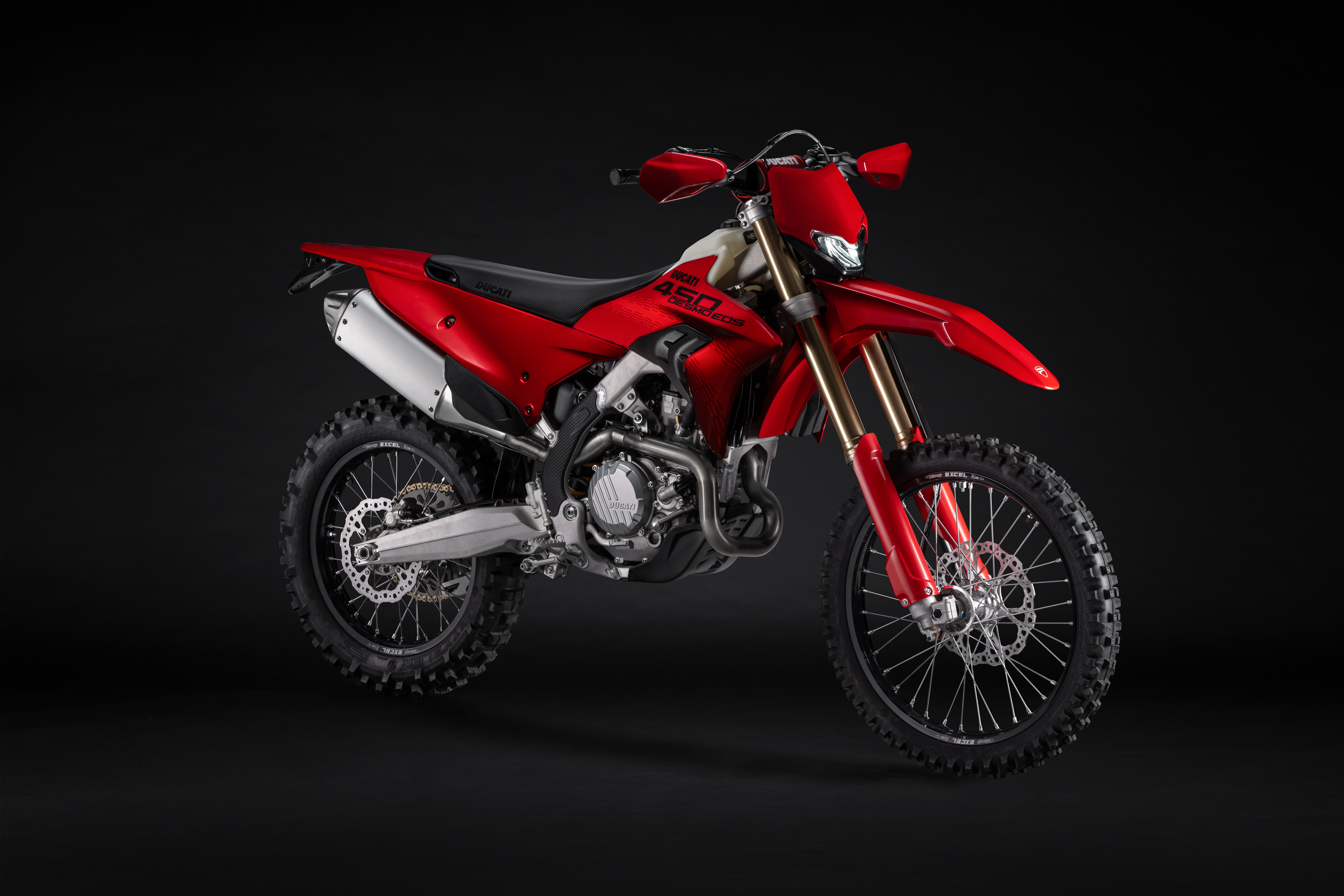
The Desmo450 EDS is derived from the Desmo450 MX. Based on the technical platform of the first Ducati Motocross bike in history, the 450 EDS embodies the fruits of meticulous development to make the bike suitable for Enduro riding through technical solutions, component selection and, of course, calibration.
Just as it did with the Desmo450 MX, Ducati has made the EDS a bike capable of amplifying the riding skills of its rider, whether professional or amateur, offering him that confidence that allows the professional to obtain superior performance, and the simple amateur to get closer to the pro rider’s performance, reducing the physical demands on both riders.
DESIGN & ERGOS
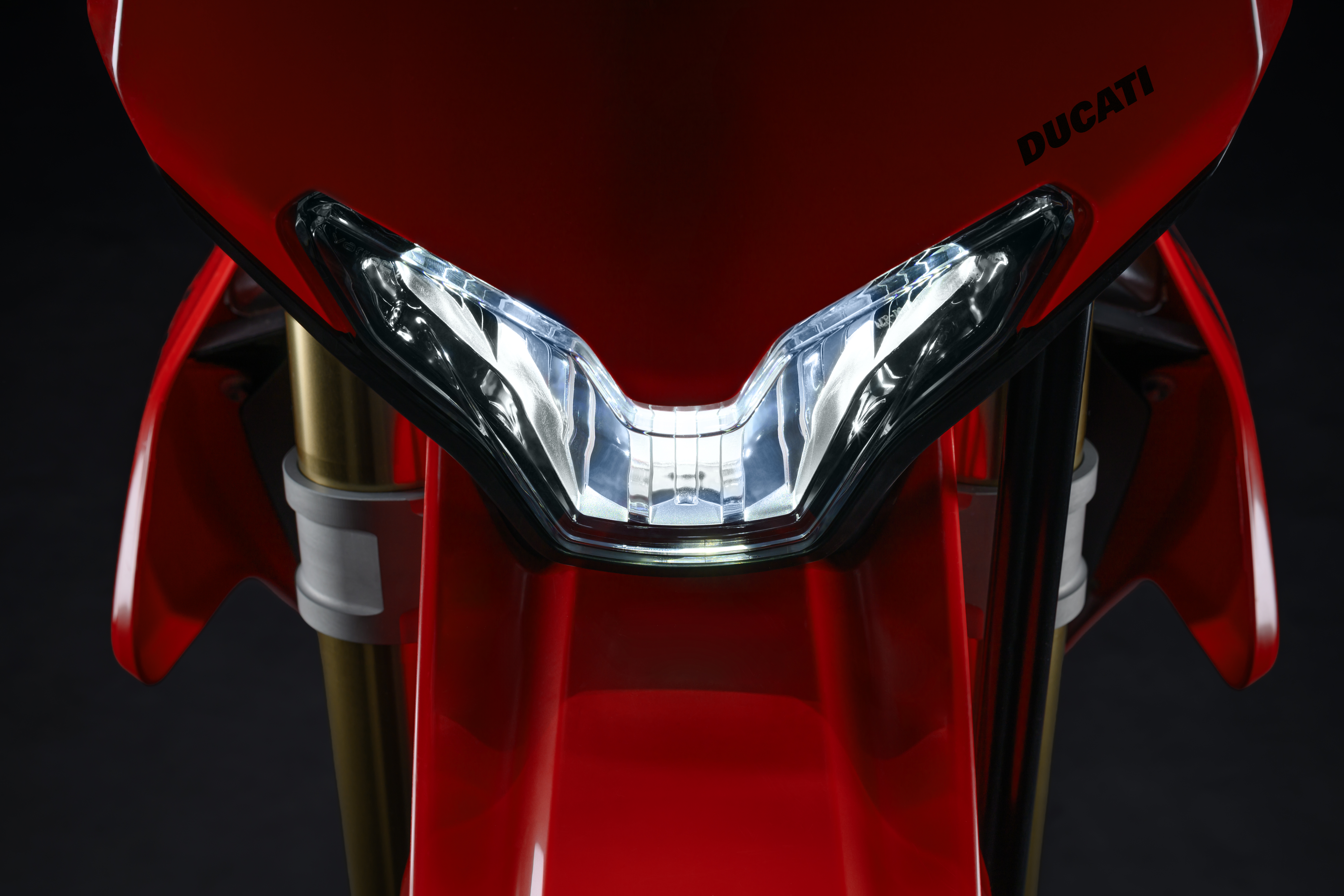
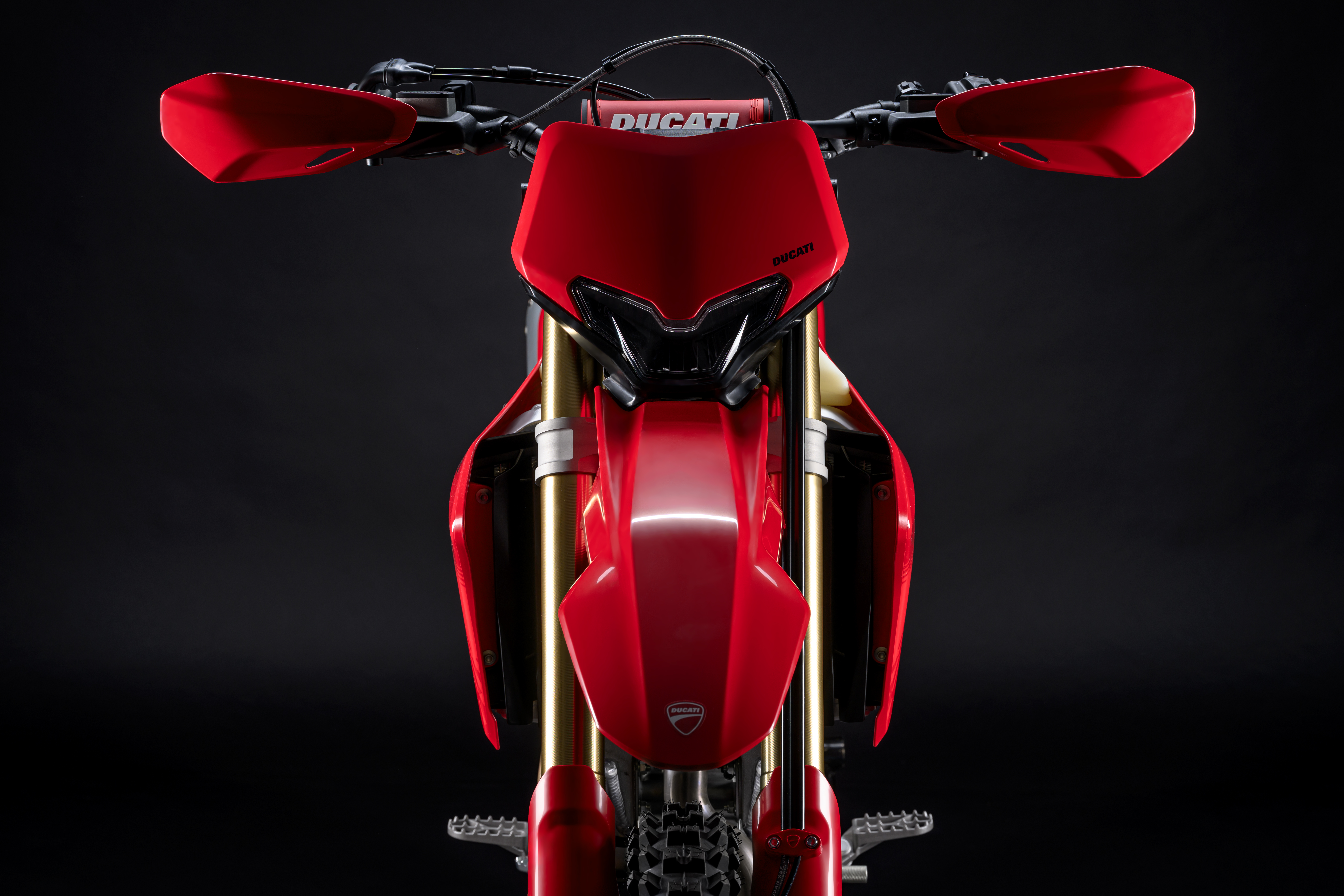
Ducati’s approach has led to the design of an Enduro bike with fluid, clean and taut surfaces, making the Desmo450 EDS immediately recognisable as a Ducati. The design of the LED headlight, reminiscent of Ducati superbikes, integrates seamlessly into the grille, giving the 450 EDS a distinctive look consistent with the Borgo Panigale style. At the rear, the headlight with brake light is incorporated into the rear mudguard.
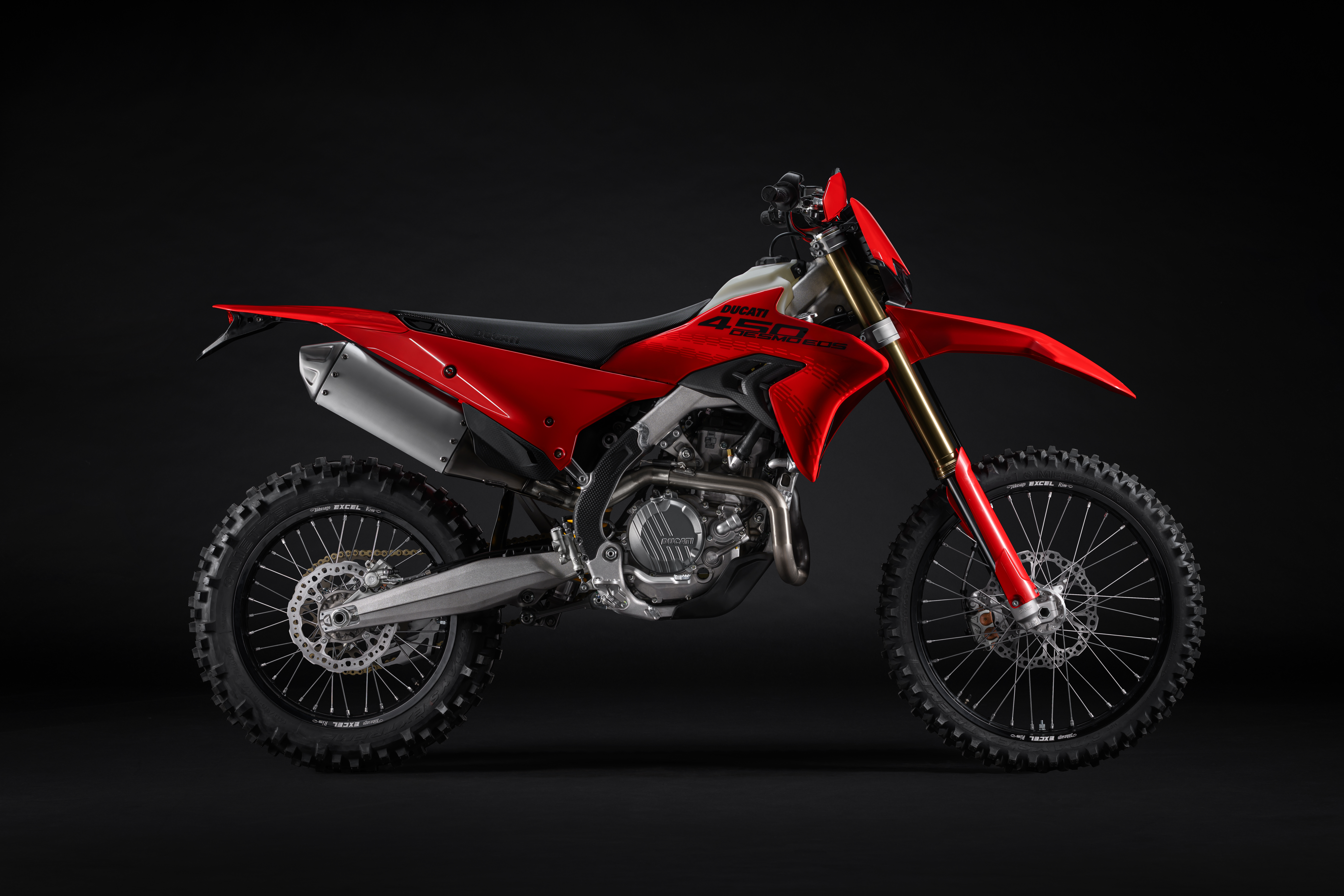
The design of the superstructures has retained the basic concepts of the Desmo450 MX version, adapting several details to the needs of racing. In particular, keeping in mind the need to ensure maximum freedom of movement for the rider, the side panels and side number plates have been designed so as not to interfere with, but rather to facilitate, the rider’s movements in various riding situations. The front side panels are designed to facilitate leg movement toward the inside of the curve, while the lateral number plates feature a change in volume near the exhaust, which, also shown on the left panel, provides a reference point for the rider when he moves backwards.
The side panels, frame guards and lower part of the number plates also feature a grip-enhancing texture, which helps hold the rider’s inner thighs and boots during acceleration and, vertically, during jumps and more challenging sections. Particular attention was paid to integrating the larger fuel tank (8.5l) with the perimeter frame and the seat, which is slightly shorter than the one mounted on the Desmo450 MX, with surfaces that are well-connected both ergonomically and stylistically.
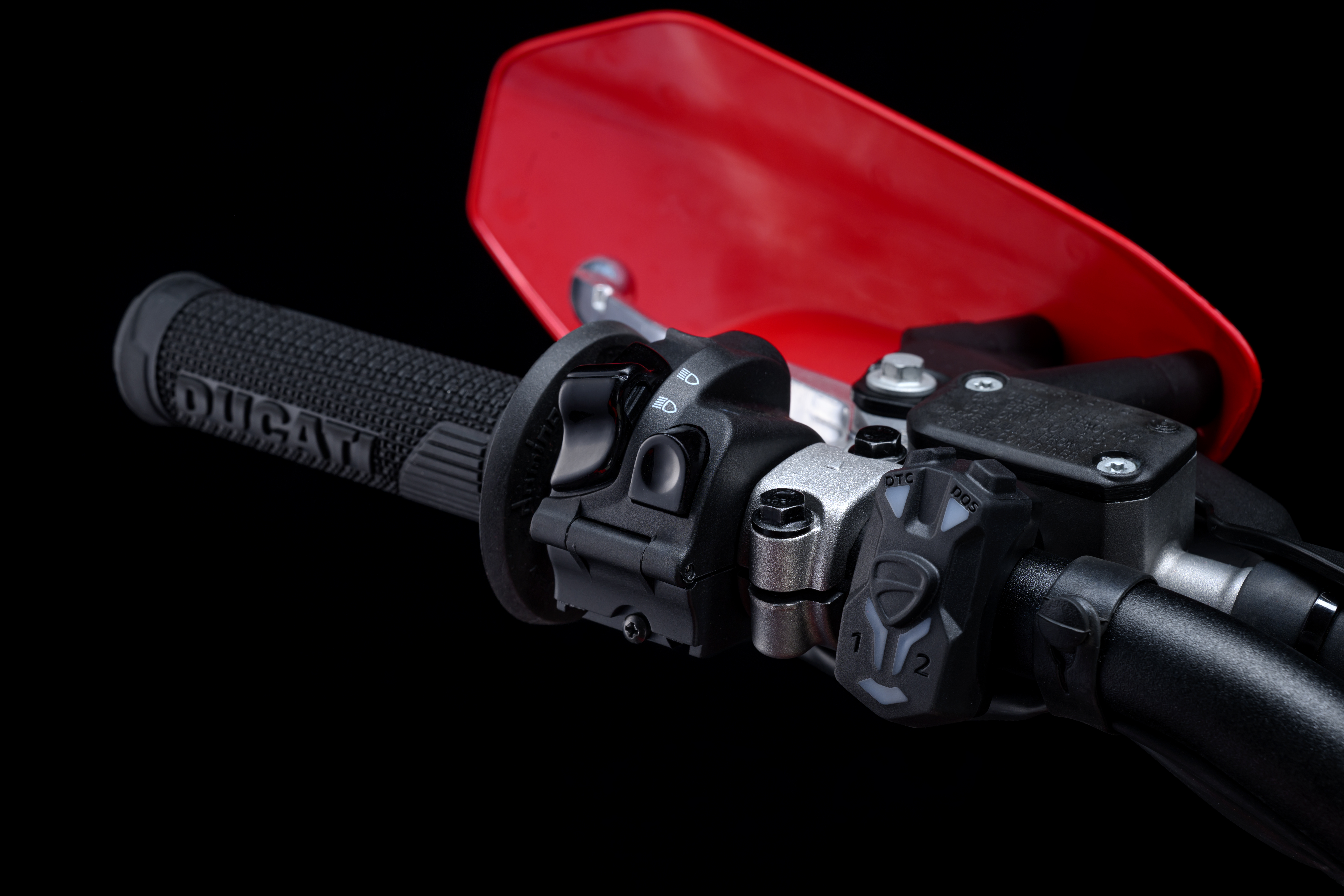
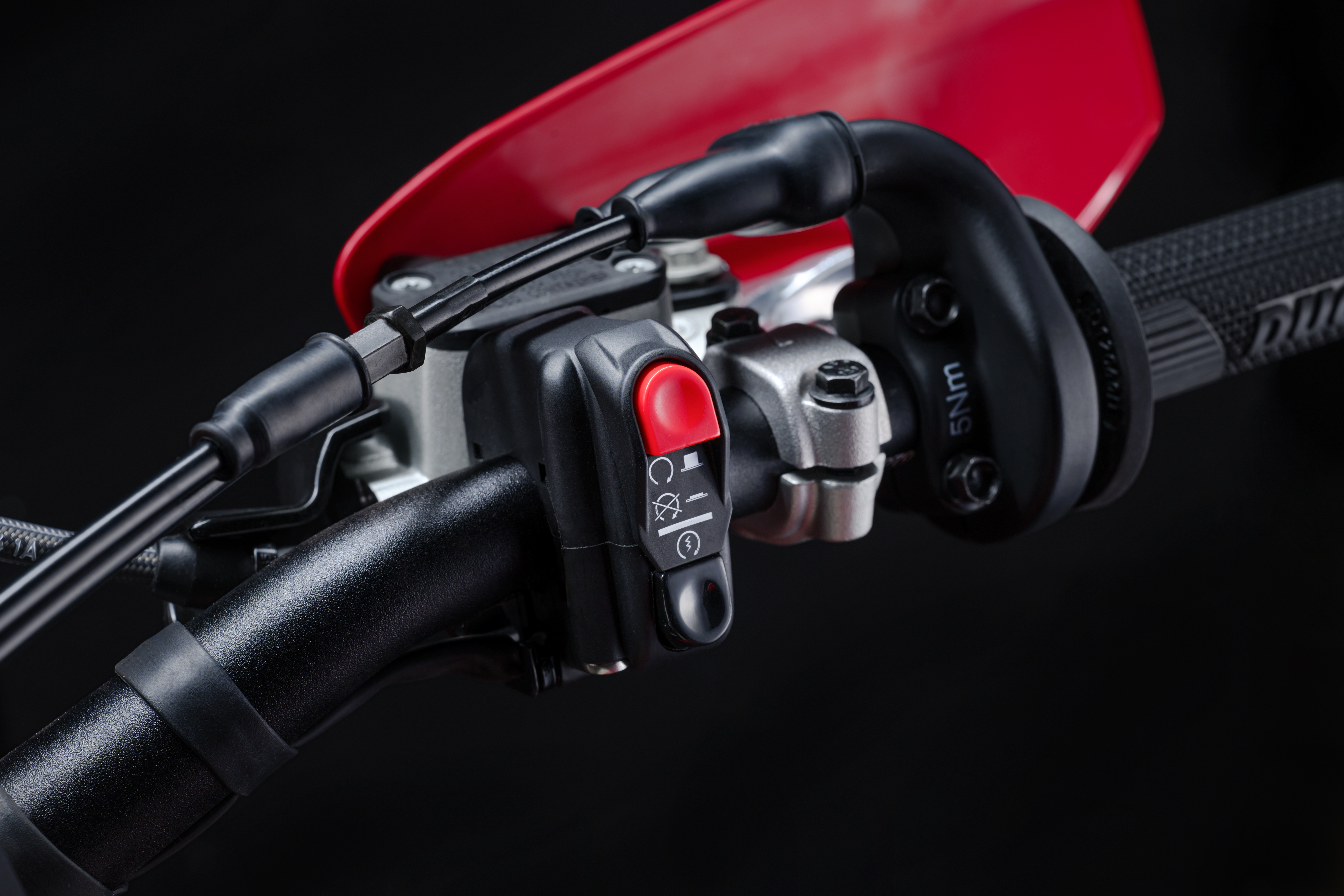
The electrical switchgear blocks include, on the left, the removable turn signal switch and the engine map selector supplied with the accessory racing kit, which also enables the Traction Control function. On the right, there is a Run/Stop switch and the start button. The motorcycle is equipped with a key-operated steering lock.
The dashboard features an LCD panel, displaying the speedometer, tachometer, hour meter, two trip meters, coolant temperature, battery charge level and fuel reserve status. Two buttons at the top of the dashboard allow you to toggle between these values while always displaying the current speed.
After turning off the motorcycle, the ECU remains on for a period of time sufficient to allow the rider to adjust the electronic settings via the X-Link app with the engine off. The app itself displays a countdown showing the remaining ECU activation time.
THE ENGINE
The Desmo450 EDS engine is a single-cylinder, four-stroke engine with a chain-driven, four-valve, desmodromic dual overhead camshaft (DOHC) system. Its displacement is 449.6cc, directly derived from the Desmo450 MX, but developed specifically for enduro use.
The bore and stroke are 96 x 62.1mm, respectively, chosen to achieve optimal valve diameters. The intake valves are made of titanium and have a diameter of 40mm, while the exhaust valves have a diameter of 33mm and are made of steel, with a hollow stem and sodium filling to improve heat exchange. The chain tensioner is hydraulically operated, offering more precise action than a conventional mechanical solution.
Thanks to the desmodromic system, which allows for greater valve acceleration management, it was possible to achieve higher valve lift values than traditional systems. Specifically, the 450 EDS engine features lower lift and overall cam profiles, aiming to achieve a more broad, sustained and smooth torque curve.
The Desmo also offers greater torque at low and medium revs, as it does not have to overcome spring loads calculated to ensure proper high-rev response – and, as a demonstration of this, on the Desmo450 EDS 70% of maximum torque is already available at 4200rpm. The Desmo rocker arms are DLC-coated.
The piston, whose design allows for a compression ratio of 12.9:1 (compared to 13.5:1 on the MX version), is equipped with a piston ring and an oil scraper ring, and adopts a “box-in-box” design with a double-spar end-cap to combine rigidity and strength, reducing the thrust surfaces with the ultimate goal of reducing friction.
For the same reason, the piston pin is coated with DLC. The crankshaft is composite, while the connecting rod is monolithic. The inertia of the connecting rods is increased thanks to a heavier flywheel and a higher- performance alternator to improve smoothness at low revs, essential for enduro use, and to handle the increased electrical loads caused by the lighting system.
Vibrations are limited thanks to a balancing countershaft, which integrates the water-pump control, thus reducing the number of components and therefore mass and inertia. For the same reason, the tone wheel with pick-up is integrated into the rotor.
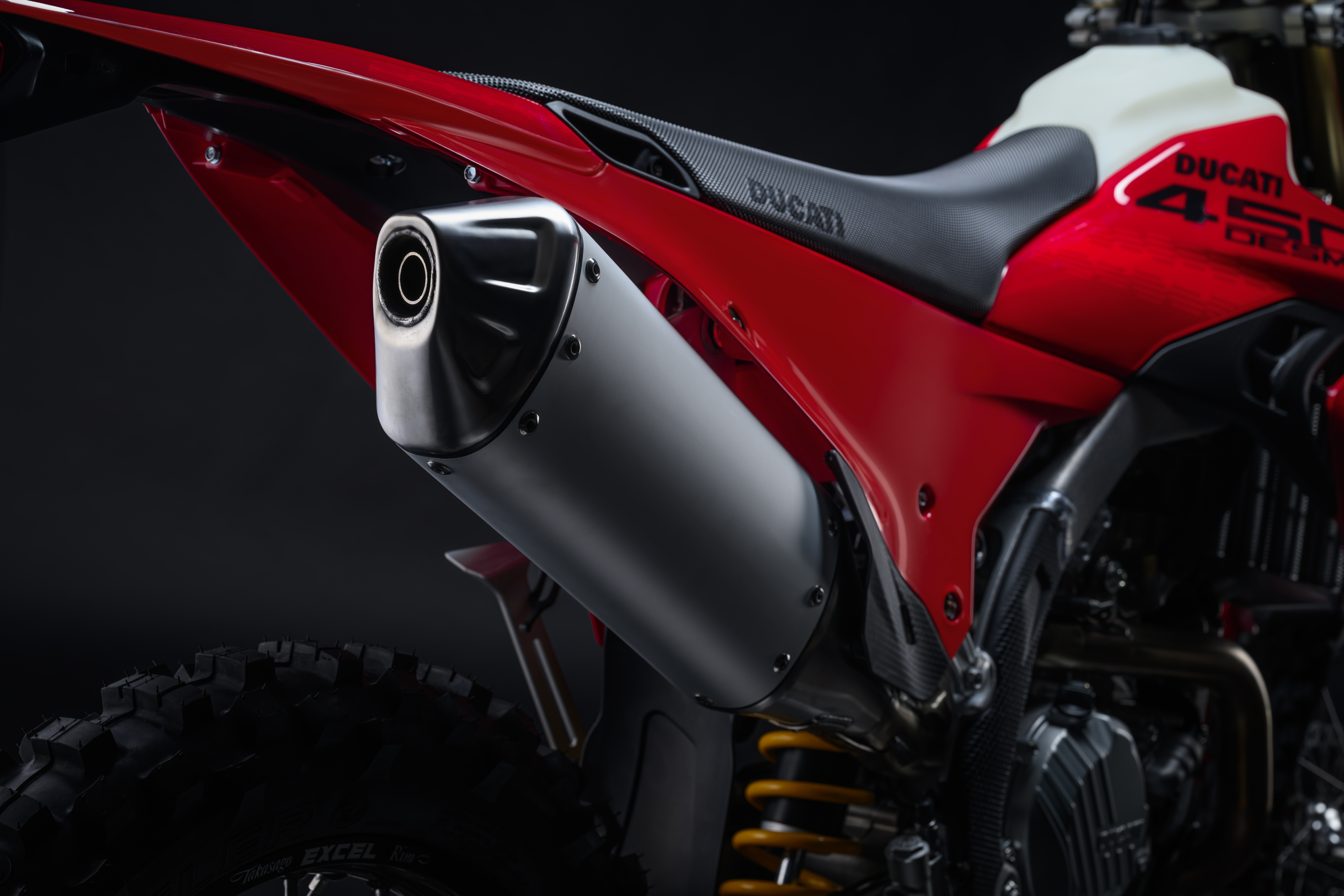
The fuel supply is managed through a 42mm diameter circular Mikuni throttle body with mechanical control. The intake uses a TwinAir filter. The exhaust, equipped with a resonator and made of mixed steel/aluminium, was developed to favour a particularly linear torque curve, and therefore a power delivery favourable for enduro use.
The radiators are not rectangular, but rhomboid in shape. This improves engine cooling, benefitting reliability and consistent performance thanks to a 6.5% increase in radiating surface area, while maintaining narrow, close-fitting side panels that do not compromise the rider’s freedom of movement toward the front.
The six-speed gearbox, with Quickshifter, features an aluminium drum, making it lighter and thus reducing inertia. Likewise, the clutch, with a cup spring, has its crown integrated into the basket, making it lighter and more compact axially. The DID chain is equipped with O-rings. The final ratio of 13/51 was designed with enduro in mind.
The alternator, cylinder head and clutch covers are made of aluminium rather than magnesium to ensure protection from impacts in narrow passages and on rocky surfaces. For the same reason, the engine is further protected by replaceable plastic covers. The engine is equipped with a standard electric fan, allowing the Desmo450 EDS to tackle any type of competition, including extreme enduro.
The Desmo450 engine, in EDS configuration, has a dry weight of 28.2kg.
MAINTENANCE MANAGEMENT
Thanks to its experience in Superbike and MotoGP, Ducati Corse has developed a specific algorithm for the Desmo450 that calculates a real-time engine stress index based on operating parameters and riding conditions. This index also considers the type of terrain on which the bike is ridden and constantly increases an engine wear percentage counter. The system then updates the maintenance schedules based on this, which can be viewed via the Ducati X-Link app.
In this way, check and service intervals are adjusted based on riding style, with more frequent interventions for professional/intensive riders or more spaced out for amateur riders, going beyond traditional static tables.
The service interval has been calibrated based on the use of a professional rider’s motorcycle; if the stress on the engine is lower, the application itself will calculate longer service intervals, resulting in an economic benefit for the customer.
Maintenance for the Desmo450 EDS includes two types of intervention, defined as “MID” and “FULL”. The MID Service includes piston replacement and valve clearance check and can vary between 90 and 120 hours, depending on actual engine wear. The FULL Service, which includes a complete engine overhaul, can vary approximately between 180 and 240 hours, again depending on the conditions and wear observed.
THE ROLLING CHASSIS
The Desmo450 EDS is equipped with a twin-spar aluminium frame that follows the inspirational principles of the Front Frame system used on Ducati’s road sports bikes, designed and manufactured with innovative techniques to optimise stiffness, weight and robustness. The choice of a twin-spar design, designed to create the straightest possible engine intake duct with the right angle to optimise intake efficiency and therefore performance, in turn led to the use of aluminium as the material for its construction.
In particular, the choice of this design allowed for a reduction in the number of welds between the various parts, thus maximising the mechanical properties of the material.
The frame structure is composite, with cast, forged and extruded elements made from refined, high-performance aluminium alloys. The most stressed parts are made from self-hardening alloys with high mechanical properties. The front section, made by casting, is a distinctive element, allowing the number of frame components to be limited to 11 compared to the twenty-plus of rival solutions.
The chosen design therefore allows for a chassis that is lighter than steel tubing solutions, allowing for the precise adjustment of the amount of material needed at each point to provide the right amount of stiffness and strength. This has resulted in an extremely light frame, weighing 8.96kg, which significantly contributes to the bike’s total weight.
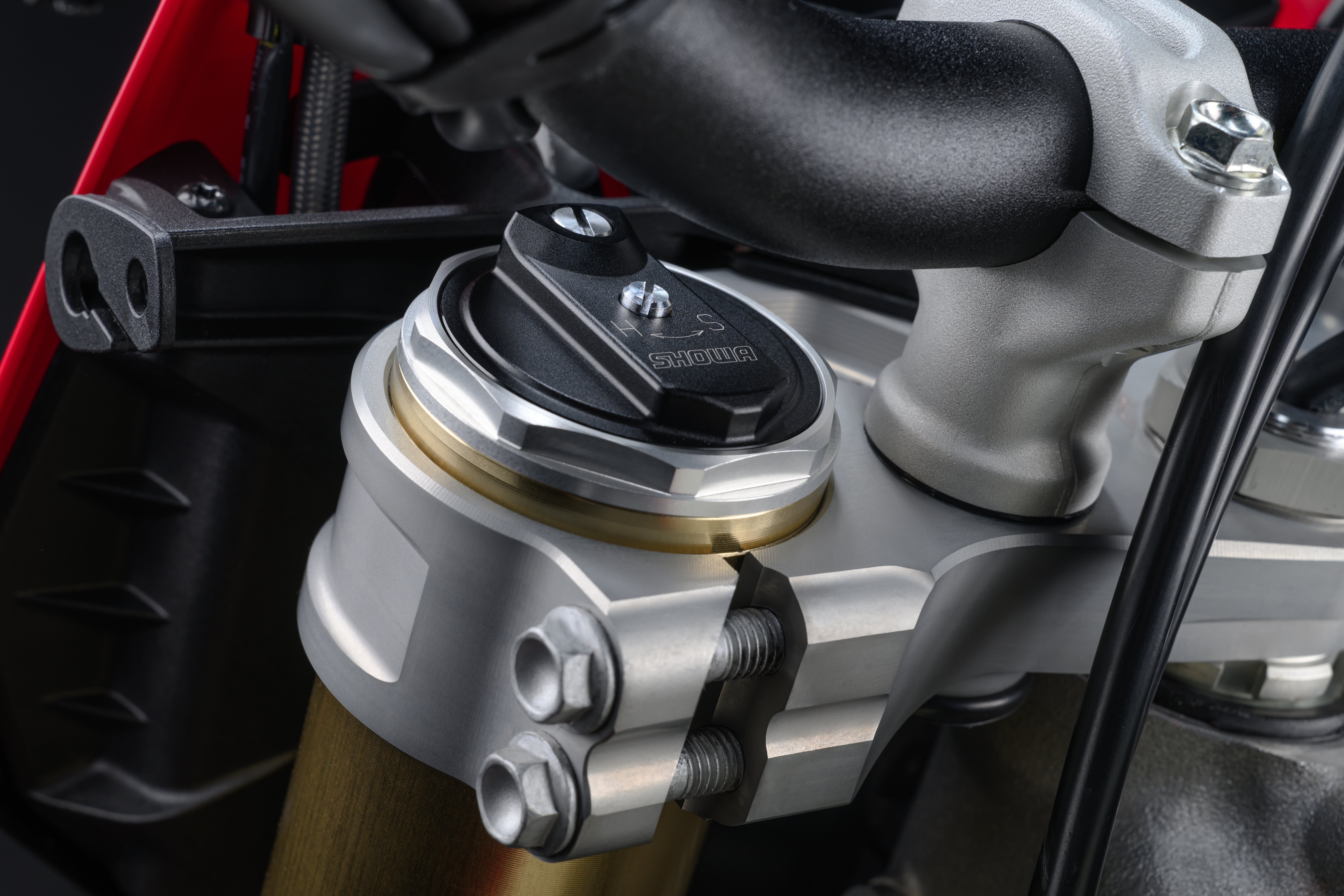
SUSPENSION: The Desmo450 EDS’s suspension consists of a 49mm Showa upside-down fork and a Showa shock absorber, mounted centrally on the cast swingarm with forged progressive linkages. The link’s progressivity, spring rate (lower than the units used on the Desmo450 MX) and hydraulic calibration were defined following thorough testing with specialist riders.
The choice of coil spring suspension rather than air suspension was deemed the best solution to meet the needs of all riding levels and simplify set-up. The front fork, featuring 310mm of travel, has an aluminium fork leg with a 33mm offset, Kashima coating on the fork legs and black anodised end-caps. The fork is a closed-cartridge type with external adjustments for compression and rebound damping. The black anodised aluminium shock absorber has a 16mm shaft and 129mm of travel, for a total wheel travel of 301mm. In addition to spring preload, the shock absorber is adjustable for compression (high- and low-speed) and rebound damping.
The fork is mounted on triple clamps made of high-performance forged aluminium, then machined to maximise the component’s stiffness-to-weight ratio while maintaining a more premium aesthetic.
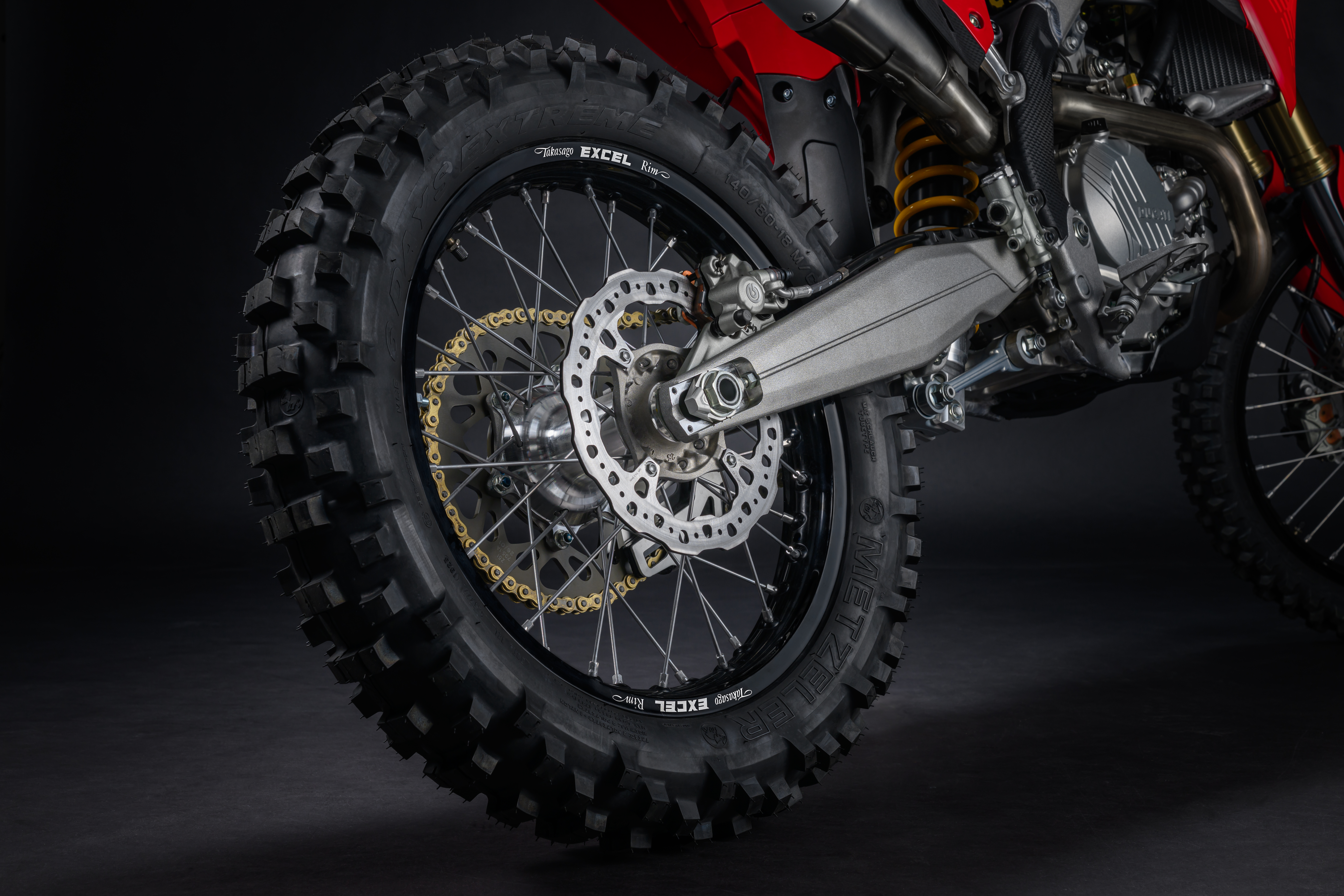
BRAKES: The braking system of the Desmo450 EDS, both calipers and master cylinders, is manufactured by Brembo, a long-time partner of the Borgo Panigale manufacturer, whose experience has been crucial in the development of the bike in a completely new environment for Ducati. The discs, 260mm at the front and 240mm at the rear, are supplied by Galfer and were developed to reduce unsprung weight, minimise the gyroscopic effect and increase the bike’s handling.
TYRES & WHEELS: The Desmo450 EDS features Takasago Excel rims with Alpina spokes, mounted on cast aluminium hubs, continuing the partnerships established with the DesertX Rally and Desmo450 MX. The tyres are Metzeler Six Days.
THE ELECTRONICS
The Desmo450 EDS capitalises on Ducati’s experience in developing electronic control and rider assistance systems. Specifically, while complying with the constraints imposed by racing regulations, the bike is equipped with a suite of controls that include Launch Control, engine brake management, and, most importantly, an advanced traction control system that acts on the engine with the same results as systems used on road sports bikes and racing bikes.
All electronic controls are pre-configured in two Riding Modes available on the Desmo450 EDS with the racing kit. By installing the accessory connectivity system, the Desmo450 EDS is equipped with a Wi-Fi module that allows the X-Link app to reconfigure the two Riding Modes, varying the control intervention levels for each. The rider can then upload the modified Riding Modes to the control unit via the Wi-Fi connection provided by the accessory module.
The Riding Modes are managed via the switch panel provided with the Ducati Performance racing kit on the left handlebar, which allows you to change the selected Riding Mode, activate or deactivate Traction Control or the Quickshifter, or engage Launch Control. The five LEDs on the switch panel indicate the status of the electronic controls and Wi-Fi activity.
THROTTLE RESPONSE: The Desmo450 EDS engine’s throttle response can be adjusted using two different throttle maps. Using the Smooth setting, the engine response is smoother and more progressive compared to the Dynamic setting, which is characterised by a more direct power delivery.
LAUNCH CONTROL: The Launch Control system, which can be set to three levels of intervention, acts on the rev limiter to help the rider make the most of the engine’s power during starts. Levels 1 and 2 provide less invasive system intervention, while level 3 ensures safer and more stable start behaviour. The system deactivates automatically when fourth gear is engaged, or the throttle is released.
ENGINE BRAKE: Engine braking management has been fine-tuned to help riders optimise motorcycle stability in extreme corner entry conditions by balancing the forces applied to the rear tyre under intense application of the reverse torque resulting from engine deceleration. The EB monitors throttle position, selected gear and crankshaft deceleration during aggressive braking, and adjusts ignition timing and ignition advance to balance the torque forces applied to the tyre. Engine braking control can be set to two levels.
DUCATI TRACTION CONTROL (DTC): The Desmo450 EDS’s traction control is a next-generation system that adjusts engine parameters for ignition timing and advance based on strategies that consider engine RPM, gear, throttle opening angle and additional sensors. The system also manages motorcycle shutdown in the event of a fall or overturn. The system is capable of controlling the actual amount of slip, offering a tangible contribution to safety and performance for riders of all levels.
The Ducati Traction Control on the Desmo450 EDS can be adjusted to four levels, with a logic tied to system intervention (lower levels indicate freer and less intrusive control, while higher levels are designed to increase bike stability) rather than to road grip. The system can, of course, be disabled.
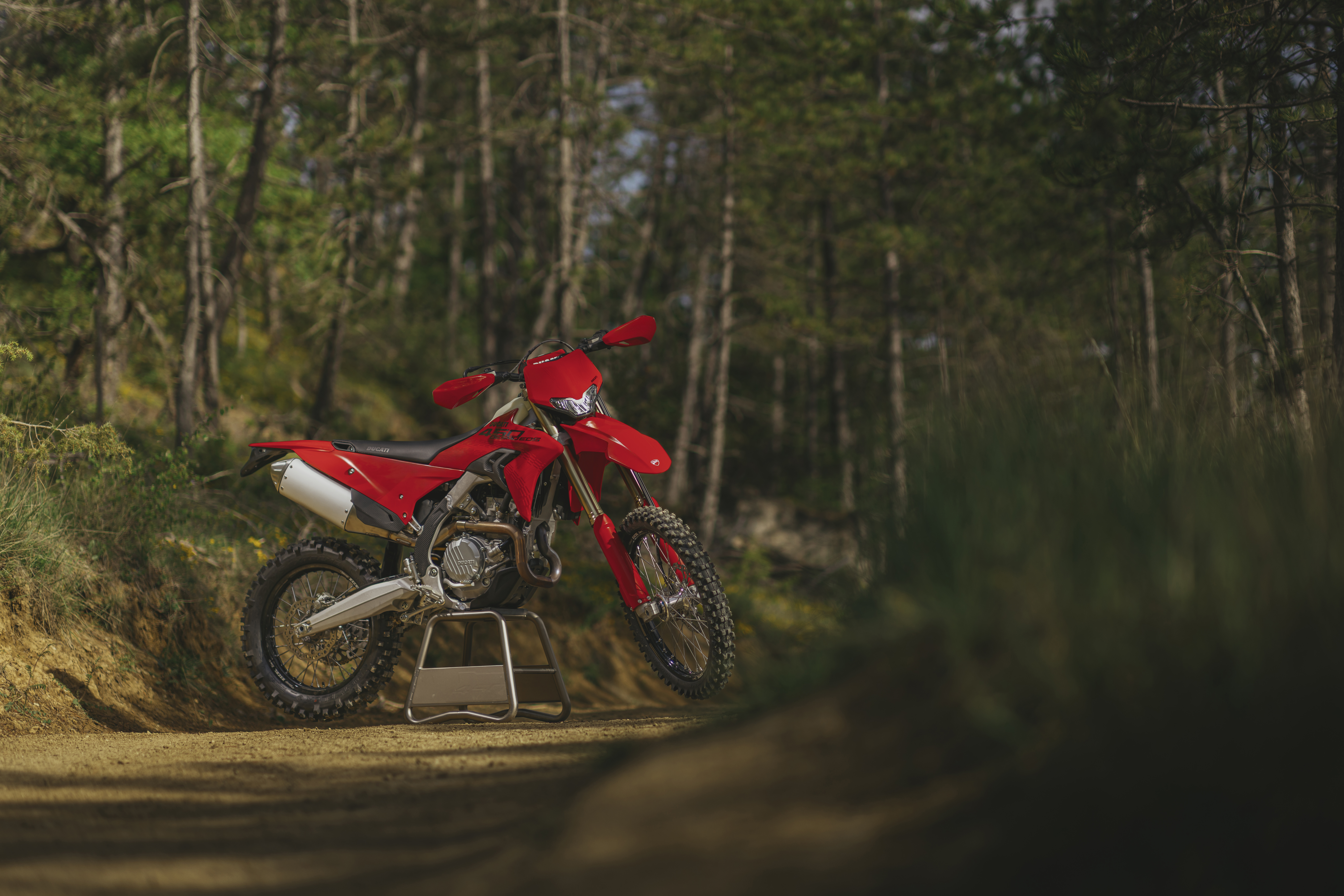
STANDOUT FEATURES – AT A GLANCE…
- Colours: Ducati Red
- Desmo450 single-cylinder engine, 449.6cc
- Twin-spar aluminium frame
- 8.5-litre fuel tank
- Fully adjustable 49mm Showa upside-down forks, 310mm travel, Kashima coating on the fork legs, specifically tuned for Enduro
- Fully adjustable Showa monoshock, 301mm travel
- Cast aluminium swingarm
- Brembo braking system with single Galfer discs, 260mm (front) and 240mm (rear)
- Metzeler Six Days Extreme tyres, 80/100-21” and 110/90-18”
- DID chain final drive
- Takasago Excel aluminium rims with Alpina spokes, 21” x 1.60” and 18” x 2.15”
- 2 Power Modes, 2 Riding Modes (with racing kit)
- Riding Modes configurable via the accessory X-Link app (with racing kit)
- Next-generation electronics package with Ducati Traction Control (DTC); Launch Control; Quickshifter, Engine Brake Control (with racing kit)
- Piston replacement every 90 hours (extendable up to 120 hours according to X-Link indications)
- Valve clearance check every 180 hours (extendable up to 240 hours according to X-Link indications)
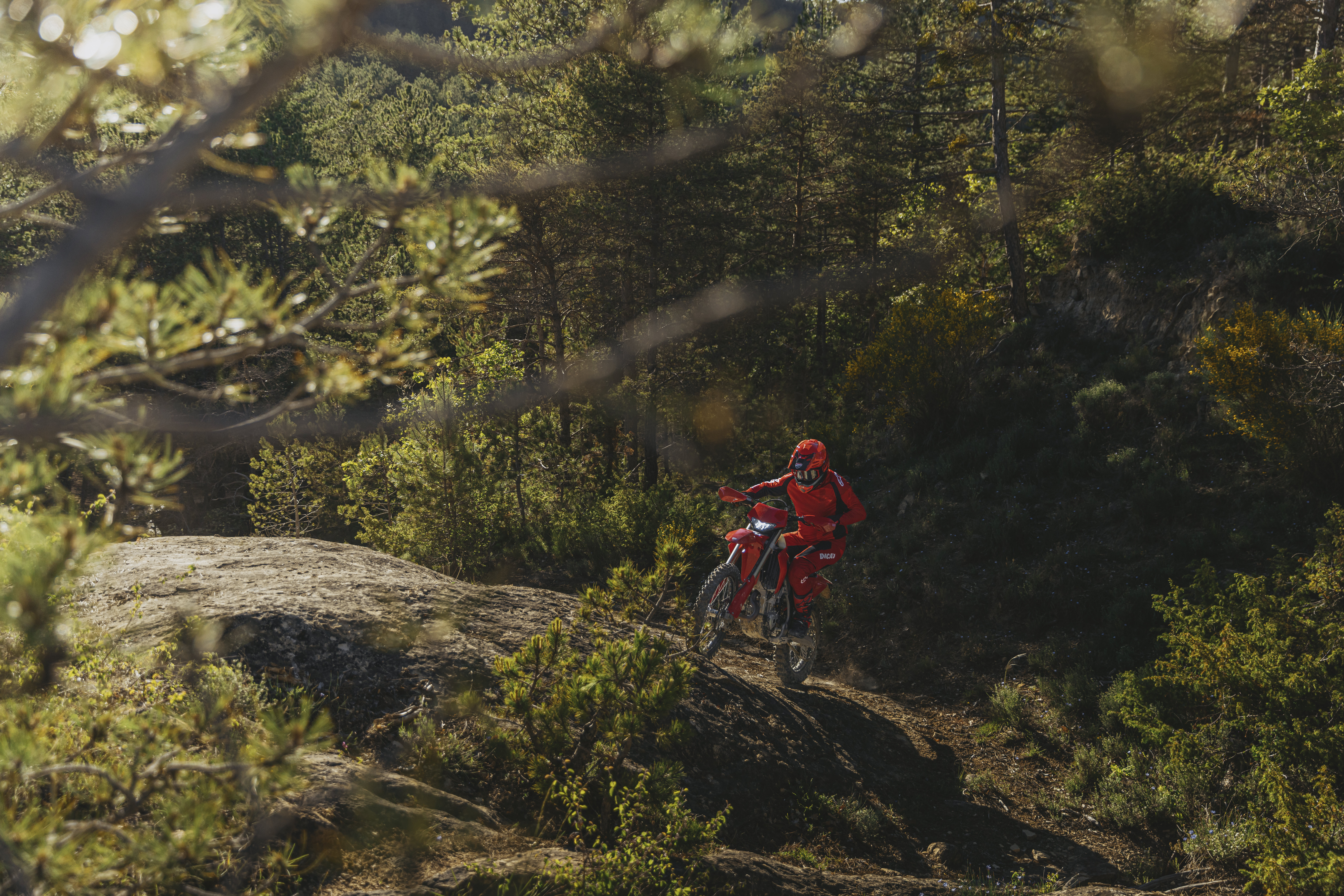
2027 DUCATI DESMO450 EDS – TECH SPECS
You might also like...
Ducati
2 days ago
TECH TALK: DUCATI’S DESMO250 MX MODEL
The Project Manager of Ducati’s Desmo250 MX offers a revealing insight into the all-new model’s R&D process.
Ducati
2 weeks ago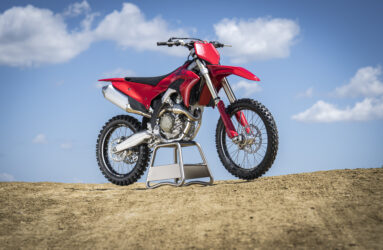
TESTED: 2027 DUCATI DESMO250 MX
After finally sampling Ducati’s all-new Desmo250 MX, there’s a lot more to talk about than its 15,000rpm rev limiter.
Ducati
2 weeks ago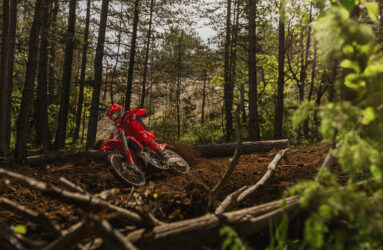
R&D REVELATIONS: DUCATI’S 2027 DESMO450 EDS
R&D test rider, Antione Meo, opens up about the development process behind Ducati’s all-new Desmo450 EDS.
Ducati
4 weeks ago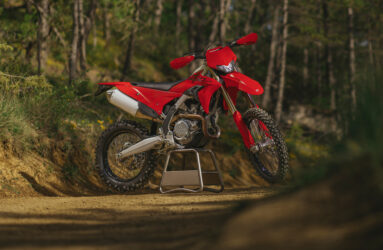
TECH TALK: DUCATI’S DESMO450 EDS MODEL
The project manager of Ducati’s all-new Desmo450 EDS enduro model talks design philosophy and R&D process.
Ducati
1 month ago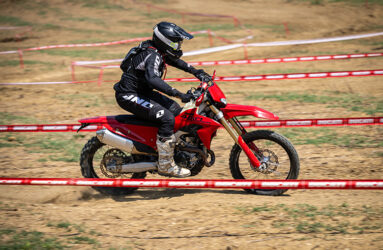
TESTED: 2027 DUCATI DESMO450 EDS
Five things that we learned from testing Ducati’s all-new 450cc enduro model at its recent international media launch in Italy.
Ducati
1 month ago
DUCATI 450 EDS: CHEAPER THAN YAMAHA?!
Will the all-new Desmo450 EDS really be the cheapest bike in the hardnose 450cc enduro bike segment? Yep!
Ducati
2 months ago
FEBVRE SIGNS WITH DUCATI FACTORY TEAM
Ducati has locked in reigning MXGP World Champ Romain Febvre to race its Desmo450 MX in 2027/2028.
Ducati
3 months ago
FIRST LOOK: 2027 DUCATI DESMO250 MX
Ducati’s Desmo250 MX is confirmed for Australia in late 2026 – here’s all the details.
Be the first to comment...