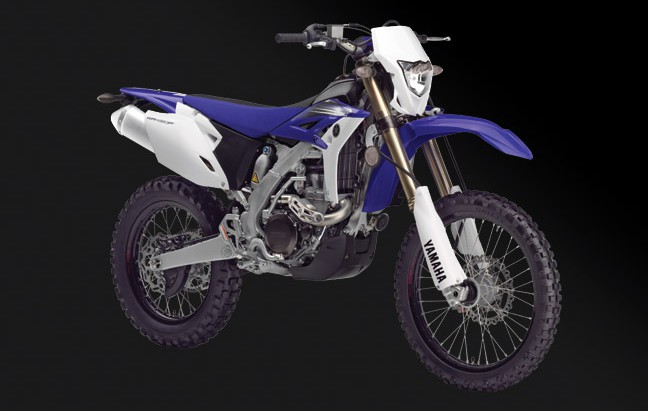
INSIDE THE 2012 WR450F’s DEVELOPMENT
Yamaha’s, Peter Payne, divulges information that suggests the all-new WR450F will arrive with more significant mods than first expected.
Transmoto: What is your history with the WR-F project, and specifically with the 2012 WR450F?
Peter Payne: I’ve been a part of the WR-F project since the development stages of the production WR250F, which was first manufactured in 2001. I’ve been directly involved with testing and liaison with YMC in Australia and also since I have been based in New Zealand. Ballard’s Offroad Racing’s Geoff Ballard, as well as our Director, Steven Cotterell, have been involved from the beginning as well.
As for the 2012 WR450F, the development of future models can take a number of years before the production model actually gets to the showroom. And yes, we had tested a version of the EFI-engine some years prior. It was important not to dilute the overall usability of the existing engine characteristics with an untried change in design, and YMC is very conscious of this. The first time we tested a 450 EFI prototype was almost two years ago.
Can you give us an insight into Yami’s discussions about ‘hard-nose’ enduro bike versus all-round trailbike design purpose for the 2012 450?
Our market is so broad and we have to present a model that sits well with both the relative novice/casual trailrider through to the hardcore Pro who competes at the top level. We can’t please everyone, but the higher number of customers will be in the recreational rider range. Of course, the top-level rider will always personalise their bike to suit their needs and riding style, and that is something both Geoff Ballard and I are very conscious of.
Regarding the situation of finding the balance, if we presented a bike that Ballard or I would take on a two-day adventure trailride, the majority of riders may hate the bike set-up. And if we presented a model that Matt Phillips would win on, weekend warriors would bounce straight into trees, as it would be too rigid. That’s the reality of it and the YMC engineers are aware of this. They’ve got a range of test riders, including engineers and ex-professional racers so all rider levels are covered.
Yamaha is traditionally quite a stable platform with good traction, so we know we are quite safe with any tweaking that is carried out with things like steering. It was interesting when the alloy frame carbureted model was first introduced in 2007, a number of people said the motor was unexciting. But you can’t go anywhere without traction and, while it may seem dull, wheel-spinning monsters don’t go anywhere.
Have Yamaha’s governing design principles changed with this bike?
The design principals are confidence-inspiring chassis design, steering, manoeuvrability, being easier to ride in rough conditions with less fatigue, and similar engine characteristics to the current model. Footpeg positioning in relation to the seat centre, and vice versa – along with handlebar positioning and ergos – are all very important for riding comfort, fatigue factor and control. Rider position is carefully looked at because we have to cover a very varied level of rider abilities as well as their method of riding. And vibration is also a very important area of concern for YMC, as vibration can destroy a bike, and the rider.
The bottom line is to create a contemporary platform that is totally versatile and will cover the aspects of riding that the WR-F has been used and known for since its inception.
How much work was put into the EFI mapping? Were OTF dual maps an option?
An enormous amount of work was carried out by the WR-F’s design team. During the EFI testing stage, every little tweak was logged and revisited to see if the gains are actually there. We tested at different times in the day in a variety of conditions and results were checked multiple times. There are actually dual sections within the ECU. You’ve got the homologated on-road spec, then the alternate spec that can be modified with the Power Tuner. That is the real beauty of this design, as a rider can create exactly what he wants for the conditions. Simply open the airbox cover, plug the Tuner into the outlet and select your map. Easy! If a rider wants a fire-breathing wheelie monster, that’s no problem. Or they can turn the WR-F into a mud tractor. The versatility is outstanding.
Why on God’s earth, if the YZ250F frame is being used as a platform for the 2012 WR450F, does the 2012 WR250F not also see an overhaul for 2012?
The WR450F got EFI because it works with the model, but that isn’t the case with the 250. Plus, the WR450F is our biggest seller.
Slightly off-subject, but when do you envisage Yamaha (or the other Japanese manufacturers, for that matter) will seriously look at producing a mid-capacity WR-F?
That’s a difficult one. Unfortunately the market is limited worldwide, and the WR-Fs are directly derived from the YZ-Fs. It would be difficult developing a completely new model from scratch that may have a limited appeal in a small market. In saying that, GB has personally tested variations of the WR250F through to 300cc, and the 250 always ended up a more balanced bike. The same results happened in NZ through Sean Clark, who made roughly the same changes with his WR250F and, in the end, reverted back to the standard size.
Make sure you grab the March Issue of Transmoto, on sale February 1, for a further look into the 2012 WR450F’s engine.
You might also like...

2026 SMX WORLD CHAMPIONSHIP VIDEO PASS
The SMX Video Pass is back, and again providing live and on-demand access to all 31 rounds.
2026 ENDURO & CC MODELS: 7-BRAND PRICE COMPARO
A handy table of easy-to-compare prices for seven brands’ 2026 enduro and cross-country models.
HONDA CLAIMS EIGHTH AUSX TITLE
Dean Wilson sealed the deal for Honda with a dominant 2025 Australian Supercross season.
National Motorcycle Insurance
1 month ago
Ride Smart | Presented by National Motorcycle Insurance
Transmoto’s Simon Barratt covers some handy tips on how to protect your dirt bike, presented by National Motorcycle Insurance.
KTM
3 months ago
KTM DOMINATES 2025 AUSTRALIAN ENDURO CHAMPIONSHIP
The KTM DM31 Racing Team wrapped up four titles at the weekend’s AusEnduro season finale.

Boost Secures 2025 AUSX Naming Rights
The Australian Supercross Championship is set to launch into its biggest season yet.
TT Circuit Assen To Host 2027 MXoN
The 80th edition of the MXoN will see the legendary event return to Dutch soil in 2027.
First Look: Aus MXGP Battleground
The 2025 MXGP of Australia track design has been revealed.
Be the first to comment...