Cost-Effective ECU Mapping Mods
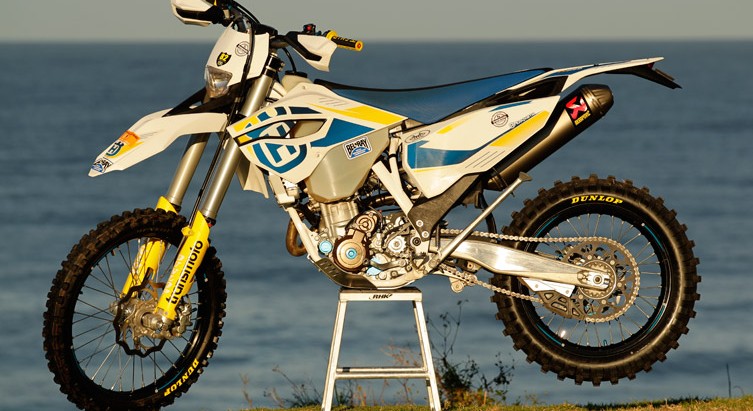
Presumably because enduro models are built for several markets around the world – where fuel quality differs markedly at the bowser – manufacturers tend to make their fuel maps on the rich side. That conservative approach has certainly been the case with the KTM/Husaberg/Husqvarna four-strokes since the fuel-injected enduro engines were introduced in 2012. Take a look at the muffler internals of a standard bike and they’re invariably covered in black soot, indicating a too-rich air/fuel ratio. And my 2014 Husqvarna FE250 project bike was no exception.
Of course, the benefit of a rich map is that fitting a free-flowing aftermarket muffler tends to generate good gains, because it automatically leans the air/fuel ratio off. But even after I fitted an Akrapovic muffler to my FE250, the sooty exhaust build-up continued. Which was good news to me, because it suggested the bike had the potential for further performance gains via a leaner fuel map.
It was at this point that I sent my FE250’s ECU off to Fuel Torque’s Rex Fleiter in Queensland. Rex is a multiple Queensland Enduro Champion who represented Australia at the ISDE back in the 1980s, and still regularly rides with several of the sport’s former greats. In recent years, he’s worked on developing maps with some of Australia’s best Pro riders, and comes highly recommended from the title-winning likes of Geoff Ballard, Ben Grabham, Kirk Hutton, Damian Smith, Geoff Braico, Jarrod Bewley and many more.

Largely through trial and error, Rex has transferred his enormous experience with carburetor tuning into the electronic age. On occasion, he uses a dyno to quantify the gains, but Rex is a firm believer that seat-of-the-pants feedback from experienced riders produces much better results. Without giving away all his mapping secrets, Rex leaned off the fuel settings across most of the rev range on my FE250 project bike. He also found the model responds well to advancing the ignition – again, done across the rev range, up to about 8000rpm. And together, the change to fuel and ignition settings really brings the FE250 alive.
We tested it back-to-back against another ECU with a standard map, and the difference between the two was much bigger than we expected. With the Fuel Torque map, the bike’s power is noticeably more responsive through the bottom-end and mid-range, and it pulls taller gears from lower in the rev range, too. In other words, it wakes the bike up by creating broader, punchier power that tears through the rev range much quicker. This lets you loft the front wheel over trail obstacles at short notice (without resorting to a handful of clutch), or short-shift and torque it around at lower revs without fear of falling off the power. The added benefit of making the bike leaner is that it uses less fuel, which means extended fuel range.
Rex also alters another parameter available through KTM’s software, called “Acceleration Correction” – which can be adjusted across four different rev ranges. This helps give the engine an extra burst of fuel (somewhat like the effect of a carb’s accelerator pump) when the bike is under load. And according to Rex, the Acceleration Correction settings play a significant role in generating performance gains.
For the average guy, this is a damn cost-effective solution. Instead of paying $1200 for a User Setting Tool (or even $170 for the Map Selector Switch, which only changes ignition settings, not fuel), Fuel Torque charges $195, including postage. You simply bubble-wrap your ECU, drop it in a 500g express Post satchel, and the thing is back in your hands within a few days. Plug her in and enjoy the instant gains!
VIDEO
2 Comments
You might also like...
Features
3 days ago
WATCH: Husqvarna Trek 2025 Film
The full-length feature film captures six days of high-country adventure in Victoria.
Ducati
4 weeks ago
2026 Ducati Xpeditions Takes On Flinders
The six-day, 1800km adventure will take on the South Australian outback for Multistrada and DesertX riders.

2026 SMX WORLD CHAMPIONSHIP VIDEO PASS
The SMX Video Pass is back, and again providing live and on-demand access to all 31 rounds.
2026 ENDURO & CC MODELS: 7-BRAND PRICE COMPARO
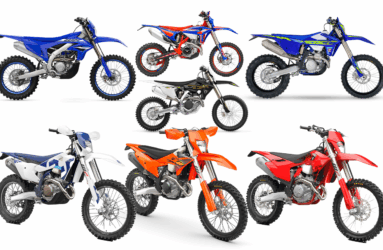
A handy table of easy-to-compare prices for seven brands’ 2026 enduro and cross-country models.

HONDA CLAIMS EIGHTH AUSX TITLE
Dean Wilson sealed the deal for Honda with a dominant 2025 Australian Supercross season.
National Motorcycle Insurance
4 months ago
Ride Smart | Presented by National Motorcycle Insurance
Transmoto’s Simon Barratt covers some handy tips on how to protect your dirt bike, presented by National Motorcycle Insurance.
KTM
6 months ago
KTM DOMINATES 2025 AUSTRALIAN ENDURO CHAMPIONSHIP
The KTM DM31 Racing Team wrapped up four titles at the weekend’s AusEnduro season finale.

Boost Secures 2025 AUSX Naming Rights
The Australian Supercross Championship is set to launch into its biggest season yet.
Hi – Excellent article! Do you have contact details for Rex Fleiter (Fuel Torque)? I Googled both and can’t find even a phone number. Thanks.
Hey Chris, his mobile number is 0408 732 471 and his email address is fueltorque@gmail.com … Cheers!